
Holistic Treatment
Holistic Rehab
Rehabilitation as system repair: mental health, behavior, environment, nutrition and sleep, with specialized medical support where it is needed.
Benzodiazepine treatment
For people who did what they were told, took the prescription as written, and found that getting off it was harder than anything that came before. Physician-supervised care, nine hours of therapy a day, and a body-and-brain protocol built in-house over twelve years.
Start here
Almost everyone who contacts us about benzodiazepines tells a version of the same story. There was a reason for the prescription — panic, insomnia, grief, a surgery, a loss, a season of life that came apart. The medication worked. Then, somewhere along the way, the dose that used to steady the day stopped steadying it, and the hours between doses started to feel like weather.
By the time people call, they are usually not asking for something exotic. They are asking to be believed. They have been told the symptoms are anxiety returning. They have been told to reduce faster, or slower, or to switch to something else, or that what they are describing does not happen. They have read forums at three in the morning. They have counted milligrams on a kitchen scale.
So let us say the plain part first: benzodiazepine withdrawal is real, it is well-documented in the medical literature, and it can be medically serious. Stopping abruptly can cause seizures and delirium. That is not a marketing statement — it is the reason the U.S. Food and Drug Administration added a boxed warning about dependence and withdrawal to the entire class in 2020, and the reason every credible guideline insists that discontinuation be gradual and clinician-led.
For many people the taper takes six months. For others, twelve. For some — usually after years of daily use, often on a short-acting compound — the arc runs closer to two years. There is nothing wrong with you if it is taking longer than the internet told you it should.
What is happening
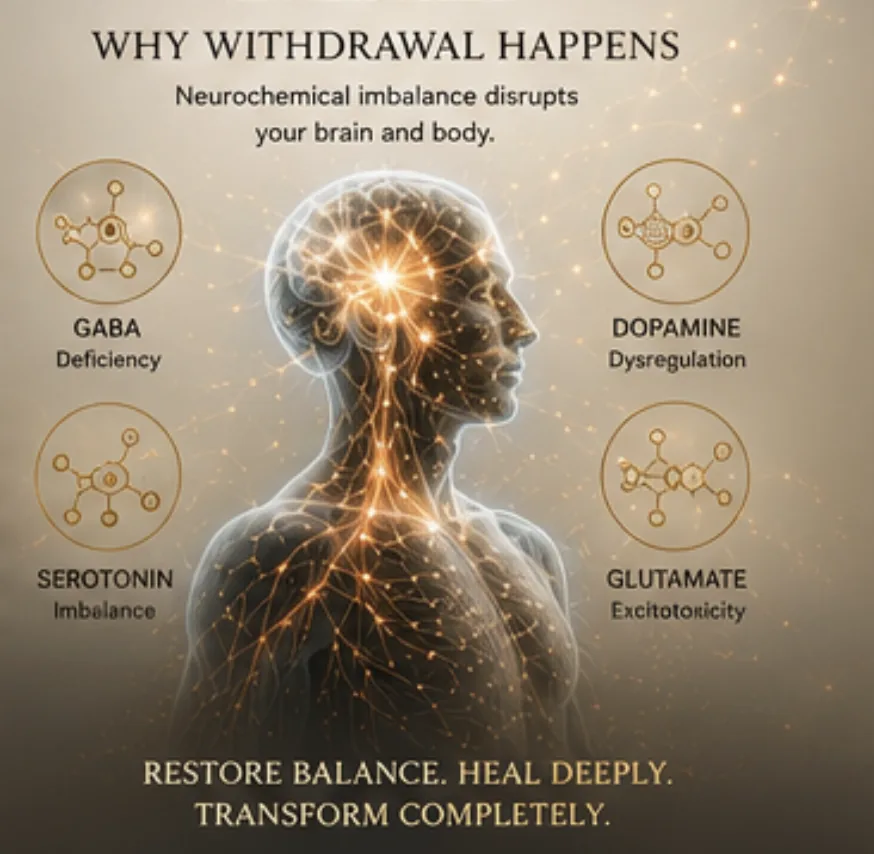
Benzodiazepines work by amplifying GABA, the brain’s primary inhibitory signal. That is why they calm so effectively and so quickly. But a nervous system is an adaptive thing. Held under that amplification for months or years, it compensates: inhibitory sensitivity down-regulates, excitatory signalling adjusts upward, and the whole system re-tunes around the presence of the drug.
Remove or reduce the drug and that compensation is suddenly unopposed. The result is not simply the original anxiety returning. It is a nervous system running with the brakes worn down — sensory overload, muscle tension, tremor, tinnitus, burning skin, derealisation, panic that arrives without a thought attached to it, and an insomnia that has very little to do with being tired.
Understanding that mechanism changes what treatment should look like. If the problem were purely psychological, talk therapy alone would be enough. If it were purely pharmacological, a taper schedule alone would be enough. It is neither. The nervous system, the endocrine system, sleep, nutrition, inflammation, movement and meaning are all involved, and they all have to be worked on at once.
Symptom patterns differ from person to person, and none of them are a sign of weak character. They are physiology.
The protocol
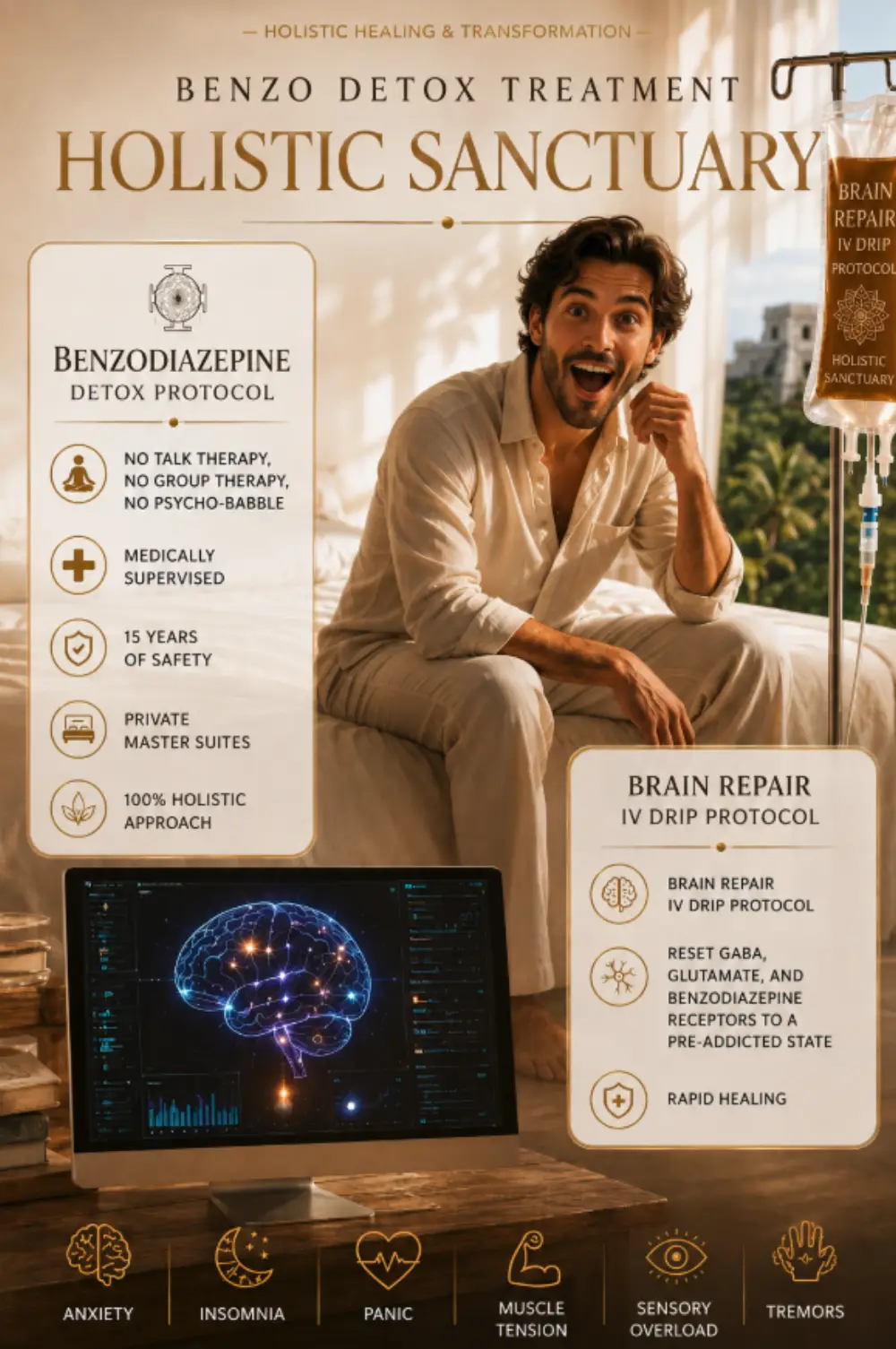
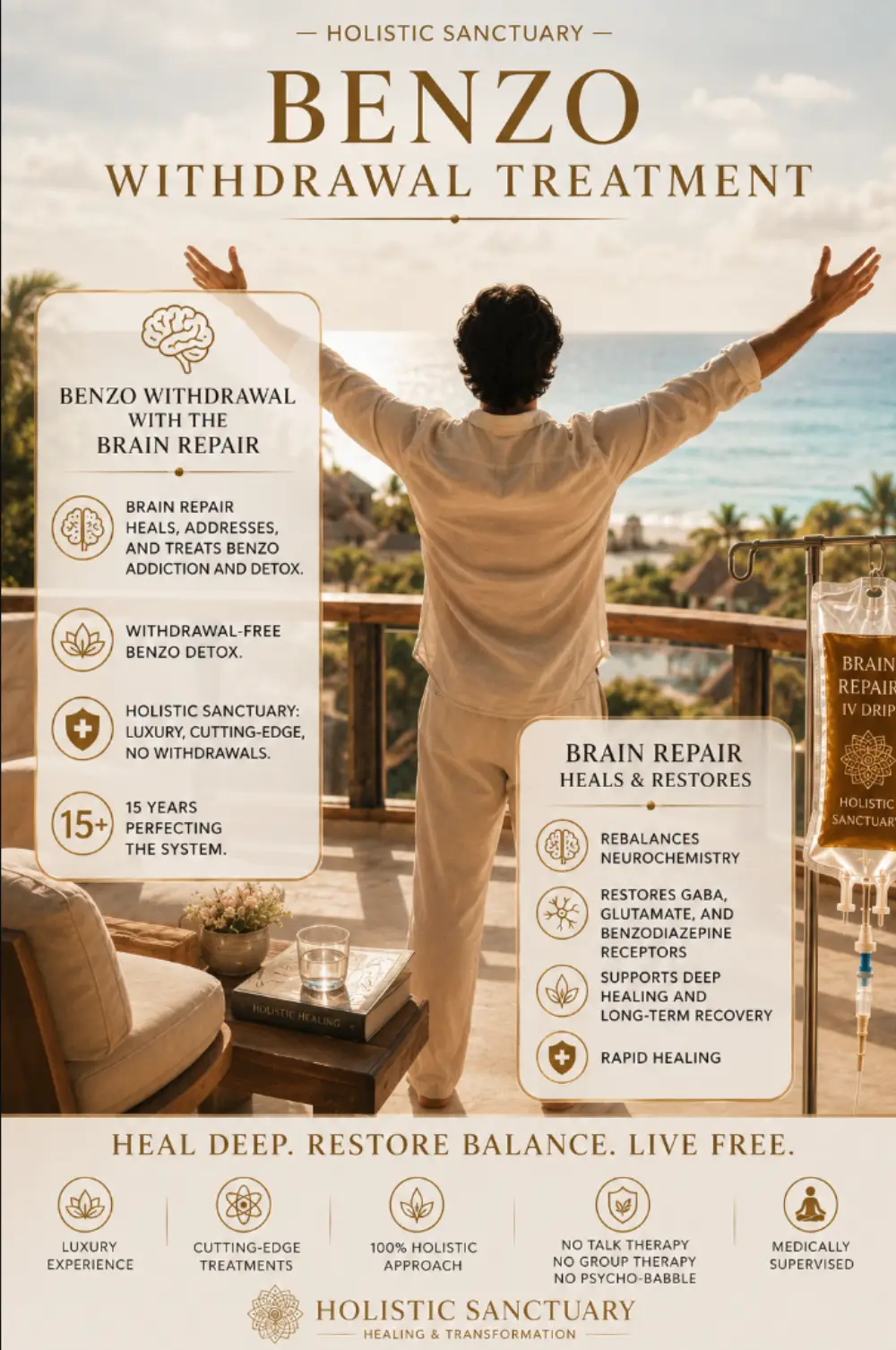
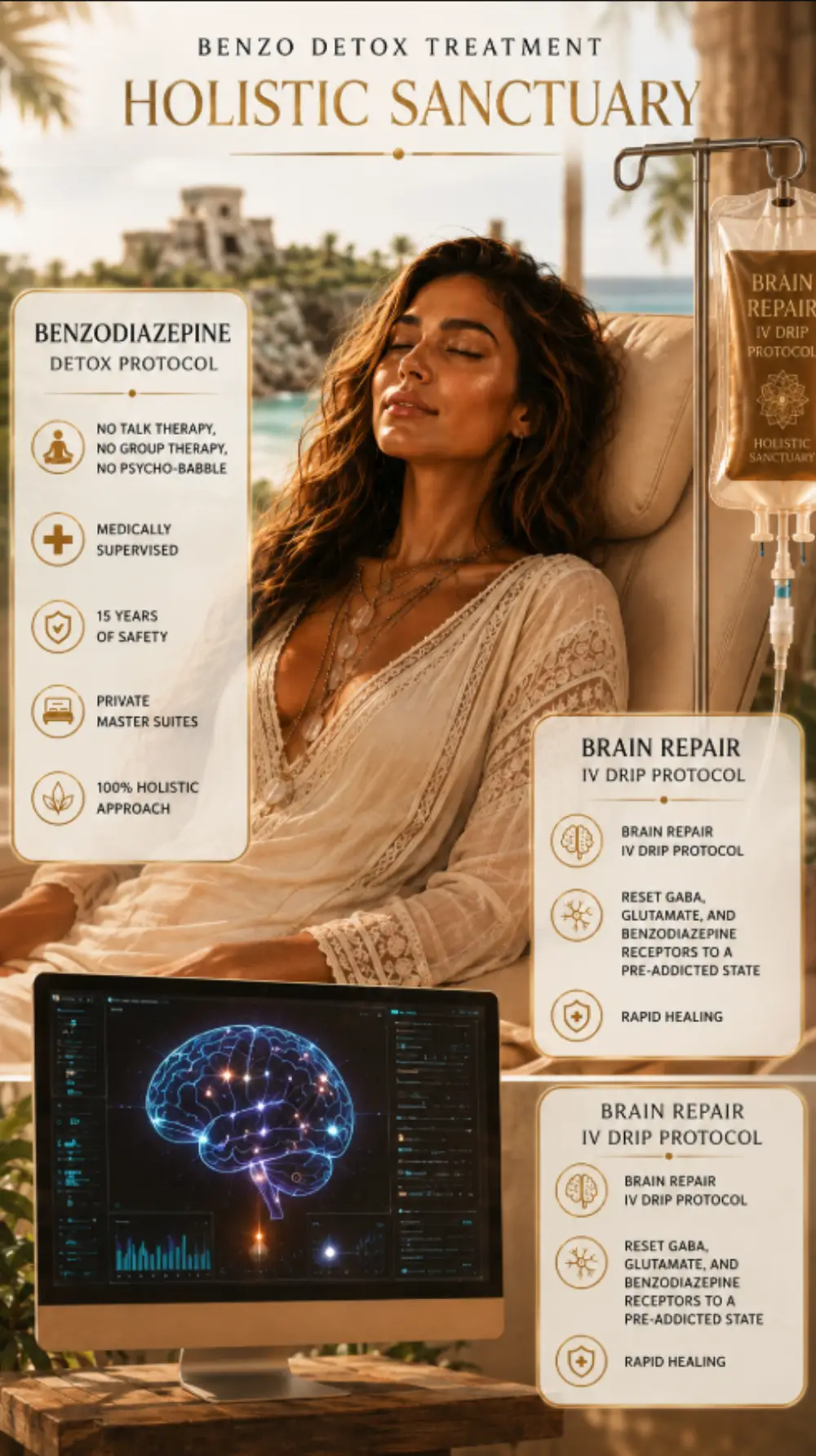
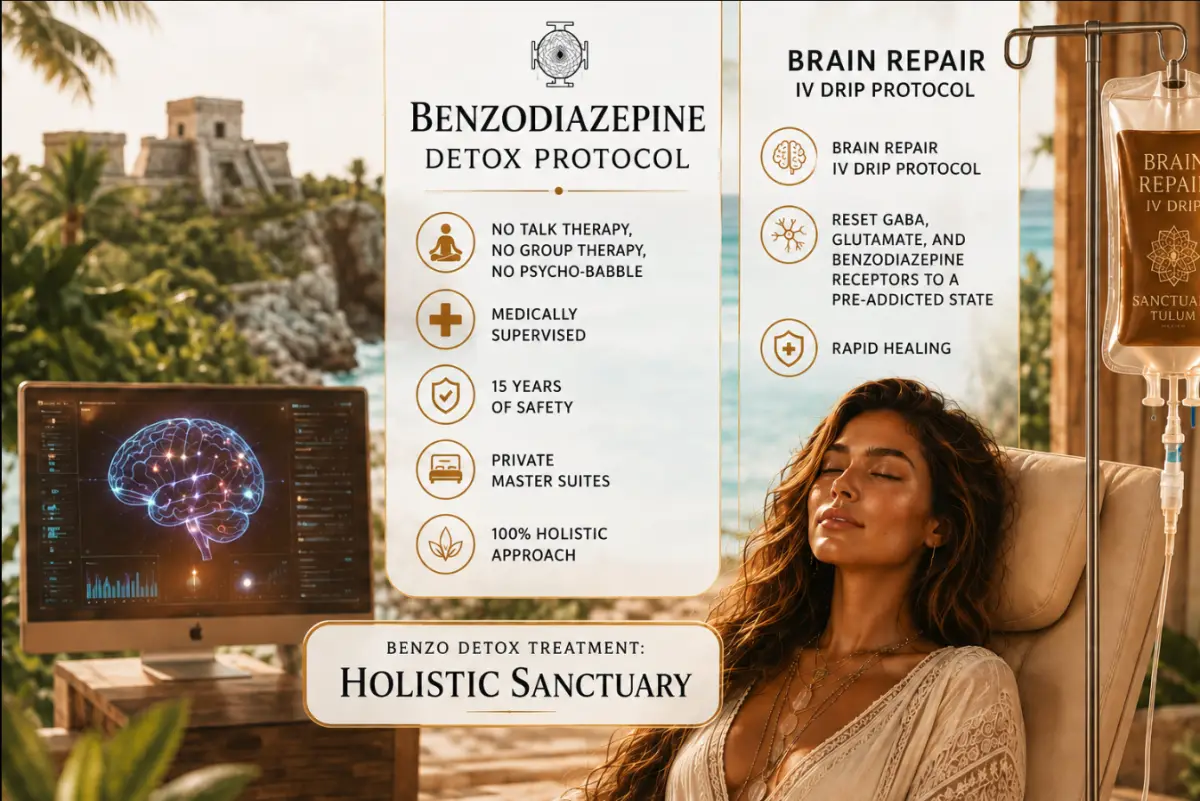
Holistic Sanctuary has been refining a benzodiazepine programme for more than twelve years. At its centre is an intravenous protocol we call Brain Repair. It was developed here, it is proprietary, and it is not available anywhere else.
It is worth being precise about what it is, because the internet is full of approximations. Brain Repair is not NAD+. It is not red light therapy. It is not hyperbaric oxygen. It is not those three combined. It is a distinct in-house formulation built from amino acids, peptides and neurotransmitter precursors, delivered intravenously by nursing staff under physician supervision, on a schedule the physician sets.
The intention behind the formulation is to support the neurochemical systems that benzodiazepine dependence disturbs — GABAergic, dopaminergic, serotonergic and glutamatergic signalling — while the taper proceeds and the rest of the programme does its work. That is the design rationale, and we describe it as exactly that. It has not been evaluated in peer-reviewed clinical trials, so we do not present it as established medicine, and we do not publish outcome figures.
We would like that to change. The honest position is that we are a small private facility that has spent over a decade building something we believe deserves to be studied properly, and studied by people with no stake in the answer. Until that happens, the appropriate way to talk about it is the way a careful clinician would: here is what it contains, here is how it is delivered, here is who supervises it, here is what we do not yet know.
We are not gatekeepers about the idea. The reason the work happened in Mexico is straightforward — the regulatory and cost environment made it possible to deliver this intensity of one-to-one care at a fraction of what the equivalent would cost privately in the United States, where a comparable arrangement can run into the hundreds of thousands of dollars a month. Care here is still expensive, it is still out of pocket, and insurance does not cover it. We would rather say that plainly than let anyone arrive surprised.
In the daily schedule
Which of these are scheduled, and when, depends on medical clearance and on how the taper is going. Nothing is applied uniformly.
A day here
An hour of cardio, then bodywork or Dead Sea mineral salt bathing. Movement and heat early in the day help re-anchor sleep, appetite and circadian rhythm, which are usually the first things benzodiazepine withdrawal disrupts.
One-to-one therapeutic sessions with the clinical team. No group curriculum, no shared processing circles — nine hours of individual therapy and therapeutic care a day, built around your history rather than a syllabus.
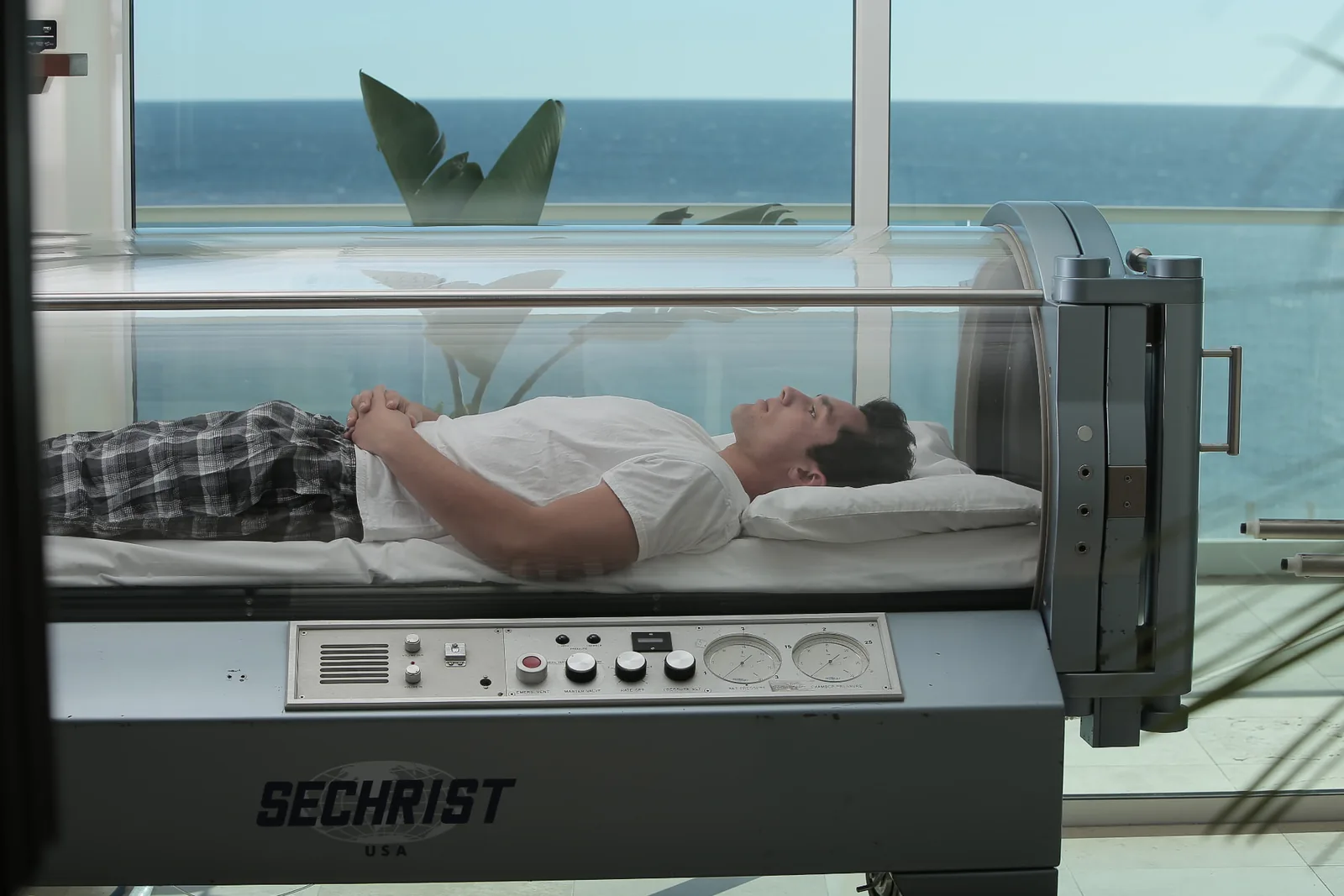
Hyperbaric oxygen, infrared sauna, red light, the light system, the Brain Repair IV where the physician has cleared it, and coffee enemas as part of the detoxification routine. Sessions are scheduled, monitored and adjusted daily.
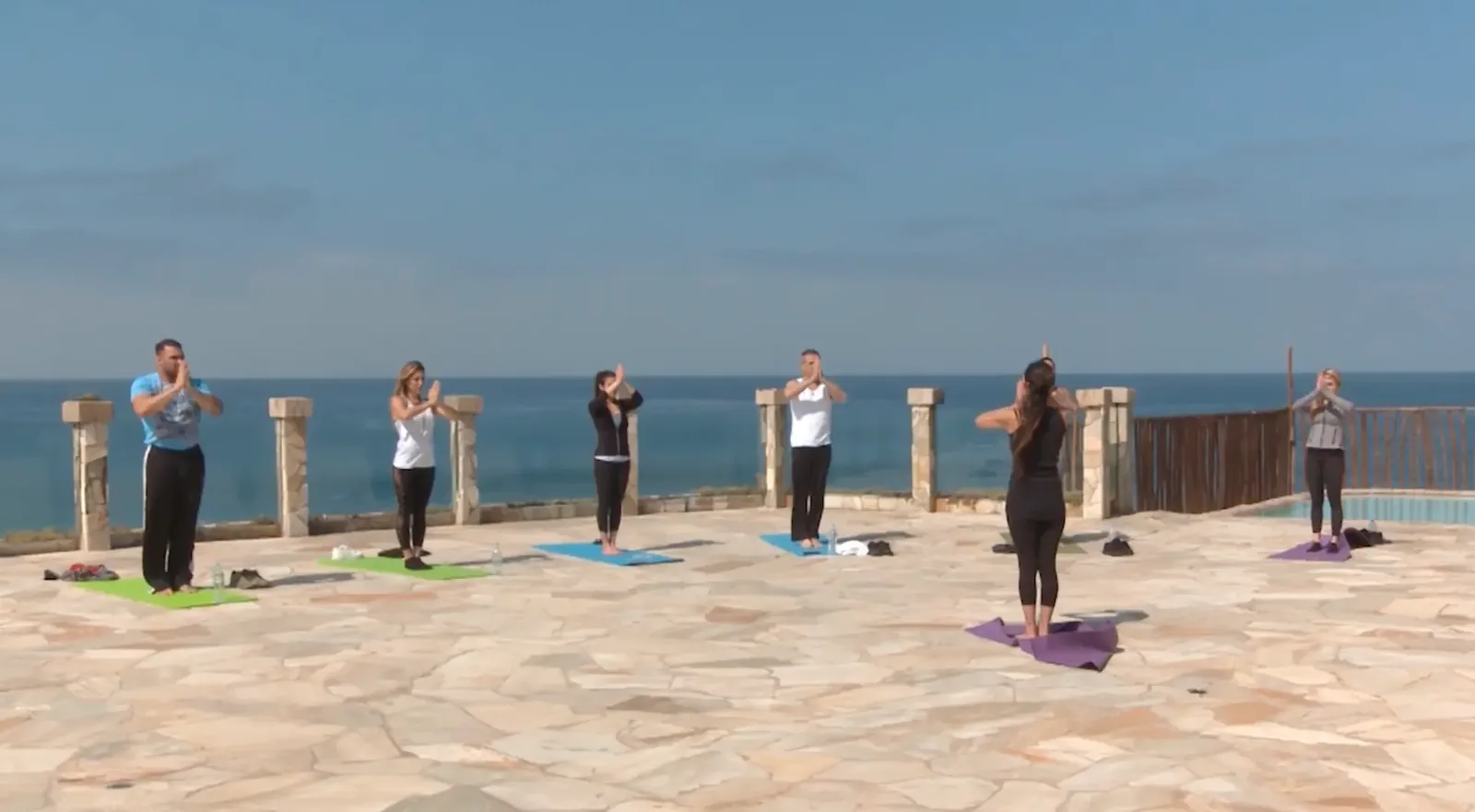
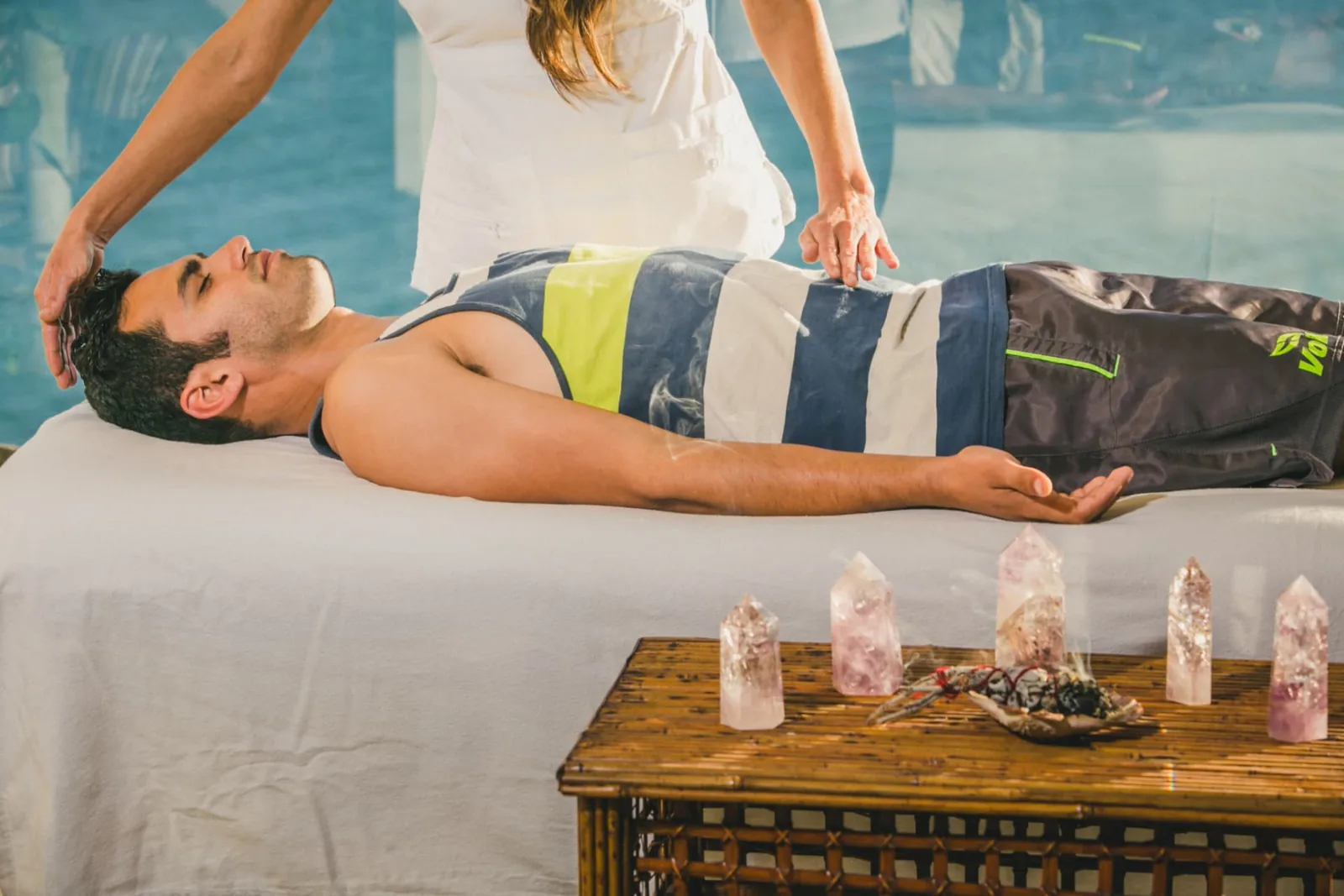
Reiki, yoga, breathwork, organic whole-food nutrition and early rest. Sleep is treated as a clinical variable, not an afterthought, because sleep architecture is often the slowest thing to return.
Physicians and nurses on site around the clock. Vital signs, symptom burden, hydration, electrolytes and medication are reviewed continuously, and the taper schedule is adjusted to the person in front of us.
Aftercare planning starts well before discharge — prescribing clinician, taper continuation, sleep, nutrition, movement, therapy and the people around you at home.
The setting
A great deal of what passes for rehabilitation is group programming delivered at volume: shared rooms, shared curriculum, a schedule designed around staffing ratios rather than around any individual nervous system. For someone in benzodiazepine withdrawal — sound-sensitive, sleep-deprived, often unable to tolerate a crowded room — that model can be actively counterproductive.
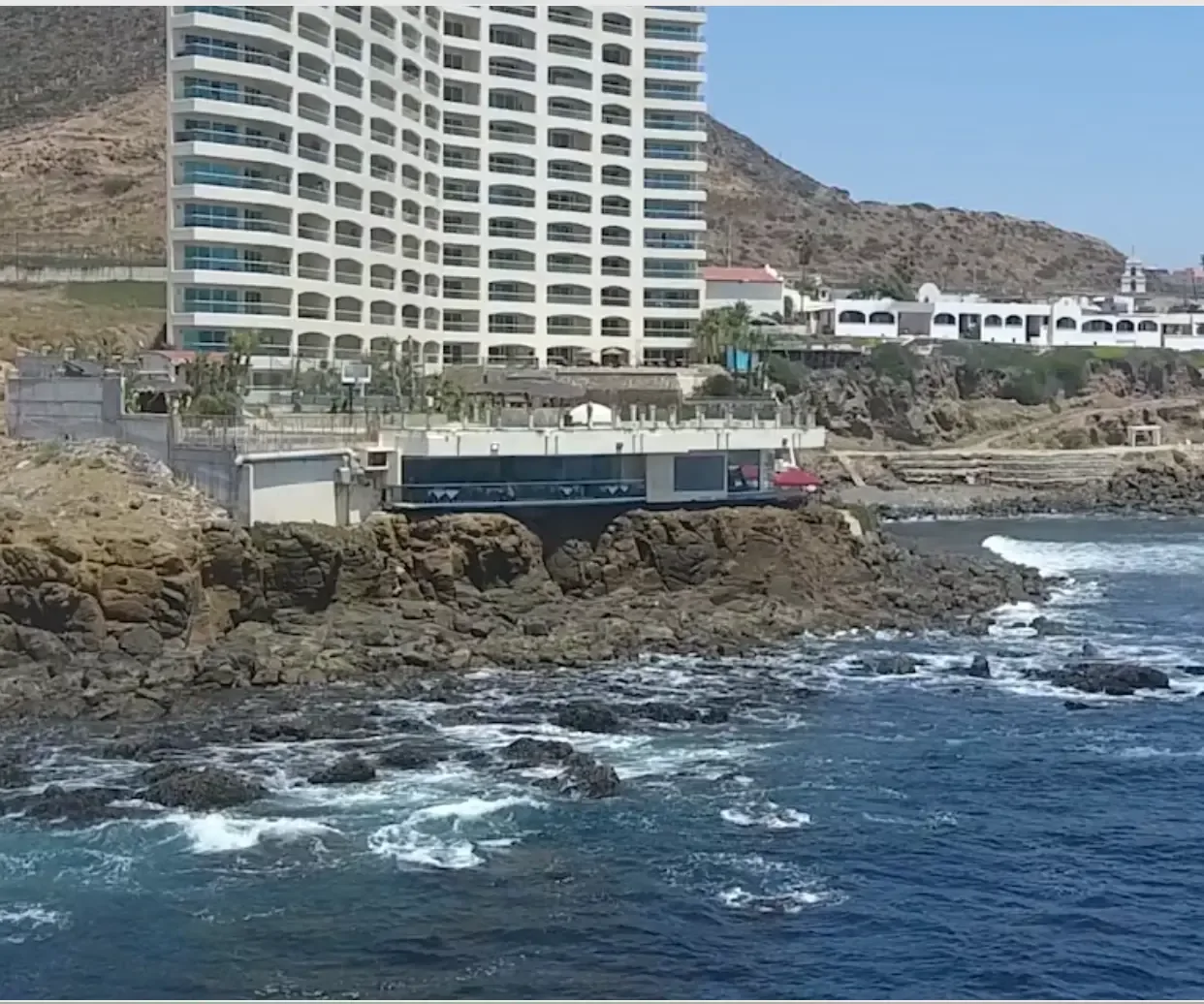
Holistic Sanctuary is roughly ten thousand square feet and accommodates three to five residents at a time. Everyone has a private master suite. The therapy is one-to-one. Meals are prepared individually. Physicians and nurses are on site around the clock, not on call from somewhere else.
Privacy is not a luxury detail here, although the setting is undeniably beautiful. It is clinical infrastructure. It is what makes it possible to sleep when sleep finally comes, to have a difficult session without performing for a room, and to have the schedule bend around your symptoms rather than the other way round.
Detox and treatment
Benzodiazepine detox is the medical process of reducing and, where clinically appropriate, discontinuing the medication. It is measured in milligrams and monitored in vital signs. It is directed by a physician, paced to the individual, and it never begins with an abrupt stop.
Benzodiazepine withdrawal treatment is everything that supports the person while that happens — sleep, nutrition, movement, bodywork, nervous-system therapies, trauma work, and the slow rebuilding of a life that does not run on a dosing schedule.
Conflating the two is one of the more common failures in this field. A taper without support is endurance. Support without a competent medical taper is decoration. Both have to be in the same plan, delivered by the same team, in the same place.
Residential time with us is intensive but finite. Most people continue tapering after they leave, under a prescribing clinician at home, and the aftercare plan is written with that reality in view rather than pretending the work ends at the airport.
Admissions is a clinical conversation, not a sales call. Some people who contact us are better served elsewhere, and we say so.
Who this is for
This programme tends to suit people who have already tried the conventional route — often several times — and who want intensive, private, one-to-one care with medical supervision and a whole-body approach running alongside the taper. Many have been on a benzodiazepine for years. Many are also carrying trauma, grief or a depression that predates the prescription.
It is not the right setting for everyone. People who need acute psychiatric hospitalisation, who have unstable medical conditions requiring a hospital, or who want a plan that guarantees a fixed result in a fixed number of days are better served somewhere else. We would rather tell you that during the first phone call.
Why we exist
Holistic Sanctuary was not built out of a business plan. Johnny Tabaie was prescribed Ritalin at thirteen and Adderall at fifteen. He lost his mother to addiction and his brother to suicide inside a licensed treatment facility. He went through the system as a patient long before he built an alternative to it.
That history is the reason this place is small, the reason the therapy is one-to-one, and the reason the founder is personally involved in every admission. It is also the reason we are careful about language. It would be easy to write outcome numbers on this page. It would also be irresponsible, because internal figures from a private facility are not evidence, and people in withdrawal deserve better than marketing.
What we can tell you is what we do, how it is supervised, who is in the building, and what remains unproven. Read Johnny’s story if you want the longer version, or the Pouyan Method for the framework the programme is built on.
We are not against medicine. Physicians run the medical side of this facility and nothing happens without them. We are not asking anyone to abandon a prescribing clinician, and we do not recommend that anyone stop a medication on their own.
What we are for is a fuller definition of care: a taper done properly, a body given what it needs to rebuild, nine hours a day of actual therapeutic attention, sleep, food, sunlight, movement, touch, and enough quiet to hear yourself think again. If that is what you are looking for, this is the kind of place that offers it.
Questions
References
Explore
The supervised taper itself: sequence, symptoms and daily support.
Read moreThe wider residential programme this care sits inside.
Read moreTrauma, PTSD, depression and anxiety alongside a taper.
Read moreThe licensed setting, medical oversight and daily structure.
Read moreThe framework that orders physiology, environment and behaviour.
Read moreRelated
Holistic Treatment
Rehabilitation as system repair: mental health, behavior, environment, nutrition and sleep, with specialized medical support where it is needed.
Mental Health
An integrative approach to PTSD, trauma, depression and anxiety that treats sleep, nutrition, environment and behavior as clinical variables.
Holistic Treatment
What an integrative treatment center actually does: clinical oversight, nutrition, environment and individualized programming under one roof.
Pouyan Method
The proprietary framework developed by Johnny Tabaie: physiology, neurobiology, environment, consciousness, behavior and integration.
Insights
Benzodiazepine Treatment
Benzo detox and withdrawal treatment: a physician-directed taper, twenty-four hour monitoring, nine hours of daily therapy and the in-house Brain Repair IV protocol.
Ibogaine
A consumer guide to evaluating an ibogaine provider: screening, cardiac assessment, medical oversight, emergency preparedness and transparency.
Mental Health
An integrative approach to PTSD, trauma, depression and anxiety that treats sleep, nutrition, environment and behavior as clinical variables.
Holistic Treatment
Rehabilitation as system repair: mental health, behavior, environment, nutrition and sleep, with specialized medical support where it is needed.
Ibogaine
Why the weeks after an experience matter: reflection, behavior, sleep, nutrition, relationships, meaning and ongoing professional support.
Ibogaine
Medical, psychological and practical preparation: history, medication review, ECG, laboratory assessment, consent and integration planning.
Ibogaine
QT prolongation, arrhythmia risk, CYP2D6 metabolism, drug interactions and electrolytes — what the safety literature establishes and what remains uncertain.
Ibogaine
A comprehensive, evidence-led resource on ibogaine: pharmacology, the research base, cardiac risk, candidacy, preparation and integration.
A confidential conversation about your medication, your history and what a supervised plan would actually look like. No pressure, no script.