Psychedelic therapy

Psychedelic therapy, described accurately.

A reference page rather than a sales page. It sets out what psychedelic therapy is, what randomized trials and observational studies have actually found for PTSD and depression, how the evidence differs sharply between psilocybin, 5-MeO-DMT, ayahuasca and ibogaine, and how screening, medical oversight and integration are handled at Holistic Sanctuary.

Written by
Johnny Tabaie
Founder, Holistic Sanctuary
Medically reviewed by
Holistic Sanctuary Medical Team
Attending physician and nursing leadership
Published
2 September 2026
Last reviewed
3 September 2026

Definition

What is psychedelic therapy?

Psychedelic therapy is a structured clinical process in which a psychoactive compound is administered under medical supervision within a course of psychological work. It is not the drug alone. In the trials that have produced the most credible results, the dosing session sits between preparatory sessions and a series of integration sessions, with trained attendants present throughout.

The distinction matters because the two things are often conflated. Recreational or ceremonial use of the same compounds happens in different settings, with different screening, different dosing, and different follow-up — and the trial results do not transfer to those settings.

No psychedelic compound is currently approved by the FDA for the treatment of depression, PTSD, or substance dependence. Several hold Breakthrough Therapy designation, which accelerates review but is not approval and is not a statement of efficacy. Everything described on this page is investigational, offered where appropriate within a supervised residential programme, and inappropriate for some people.

Indication

Psychedelic therapy and PTSD.

PTSD is the indication with the largest completed randomized dataset, and it is also the clearest illustration of why a positive trial is not the end of the argument. MDMA-assisted therapy reported statistically significant reductions in clinician-assessed PTSD severity across two phase 3 trials. In August 2024 the FDA declined to approve the application and requested at least one additional trial, citing concerns that included functional unblinding and trial conduct.

Psilocybin for PTSD is at a much earlier stage: small open-label and early controlled studies, with results that are preliminary. Ayahuasca and 5-MeO-DMT have observational reports in trauma-exposed populations, not controlled trials in diagnosed PTSD.

What this means practically

Trauma-focused psychotherapies — prolonged exposure, cognitive processing therapy, EMDR — remain the treatments with the strongest evidence base for PTSD, and they are not displaced by anything described here. Where supervised psychedelic work is used, it is used alongside psychological treatment, not in place of it.

Anyone with a personal or family history of psychotic illness or bipolar I disorder is screened out of classic psychedelic work. Dissociative presentations and complex trauma require particular care, because the acute experience can be destabilising.

Indication

Psychedelic therapy and depression.

Depression, particularly treatment-resistant depression, has the most substantial randomized evidence for a classic psychedelic. A phase 2 trial of single-dose psilocybin in treatment-resistant depression reported greater reductions in depression scores at three weeks in the 25 mg group than in the 1 mg comparator, with effects attenuating over twelve weeks. A separate trial comparing psilocybin with escitalopram found no statistically significant difference on its primary outcome measure.

Read together, those two results are the honest summary of the field: a real and rapid signal, not an established superiority over existing antidepressant treatment.

Cautions specific to depression

Suicidal ideation and self-injurious behaviour were reported in psilocybin trial participants, including in treatment groups. Active suicidality is a reason for intensive conventional care, not a reason to accelerate into an experimental session.

Existing antidepressant medication complicates matters in both directions: discontinuation carries its own risks, and some combinations carry interaction risk. Medication decisions are made by a physician, gradually, and never as a precondition imposed by a marketing promise.

Compound by compound

The evidence is not the same for each compound.

Grouping these substances together as "psychedelics" obscures the most important fact about them: their evidence bases differ by orders of magnitude, and so do their risk profiles. Each profile below separates what has been established, what is early clinical work, what rests on observation, what exists only in animal or cell models, and what remains genuinely unknown.

Strongest randomized dataset of the classic psychedelics

Psilocybin

A serotonin 5-HT2A receptor agonist, studied principally in major depressive disorder, treatment-resistant depression, cancer-related psychological distress, and alcohol use disorder.

Established evidence
Acute pharmacology, dose–response, and short-term safety profile in medically screened participants are well characterised. No approved indication.
Early clinical evidence
Multiple randomized phase 2 trials in depression; a phase 2 trial in alcohol use disorder reported reduced heavy drinking days. Samples are small and follow-up short.
Observational evidence
Open-label cohorts and survey data suggest durable subjective benefit for some participants, with the selection and reporting biases those designs carry.
Preclinical research
Animal and in-vitro work documents increased dendritic spine density and synaptic plasticity markers after single administration.
Unknowns
Optimal dose and spacing, how much effect is attributable to accompanying psychotherapy, who responds, durability beyond a year, and behaviour in people taking SSRIs.
Early clinical stage

5-MeO-DMT

A short-acting tryptamine with rapid onset and brief duration, in development as a synthetic formulation for treatment-resistant depression.

Established evidence
Pharmacokinetics and the short duration of the acute experience are characterised. No approved indication and no completed phase 3 programme.
Early clinical evidence
Early-phase trials of synthetic formulations in treatment-resistant depression have reported reductions in depression scores; these are small, early studies.
Observational evidence
Naturalistic and retrospective reports describe improvements in mood and anxiety in some users, alongside reports of acute distress and adverse events.
Preclinical research
Animal studies report neuroplasticity-related changes; mechanistic work remains at an early stage.
Unknowns
Durability, repeat-dosing effects, interaction with psychiatric medication, and how synthetic formulations compare with non-standardised material.

Observational and small-trial evidence

Ayahuasca

A plant preparation combining DMT with MAO-inhibiting beta-carbolines, studied mainly in depression and in long-term ceremonial-use cohorts. The MAOI content is the central safety issue.

Established evidence
The MAO-inhibiting pharmacology and its interaction risk with serotonergic medication are well established, as is the frequency of vomiting and gastrointestinal effects.
Early clinical evidence
A small randomized placebo-controlled trial in treatment-resistant depression reported rapid antidepressant effects; the sample was very small.
Observational evidence
Cohort and survey studies of ceremonial users report improvements in wellbeing measures, with substantial self-selection.
Preclinical research
Animal and cell studies of DMT and harmine describe neurogenesis-related and anti-inflammatory signals; these are not clinical findings.
Unknowns
Dose standardisation, comparative efficacy against established antidepressant treatment, and safe protocols for people on psychiatric medication.

No completed randomized trials — documented cardiac risk

Ibogaine

An iboga alkaloid studied primarily in opioid dependence. It carries the most serious physical risk profile of the compounds on this page and is the one most often misrepresented.

Established evidence
Ibogaine prolongs the QT interval and is associated with cardiac arrhythmia; deaths have been reported, predominantly in unmonitored settings. This is not disputed.
Early clinical evidence
None to regulatory standard. There are no completed randomized controlled trials establishing efficacy for any indication.
Observational evidence
Open-label and retrospective cohorts in opioid dependence, and a 2024 observational study of magnesium–ibogaine in veterans with traumatic brain injury reporting improved functioning at follow-up.
Preclinical research
Animal work on noribogaine and on withdrawal-related signalling underpins the interest, without translating into controlled human efficacy data.
Unknowns
Whether benefits observed in cohorts survive controlled testing, safe dosing margins, and which patients can be cleared cardiologically with confidence.
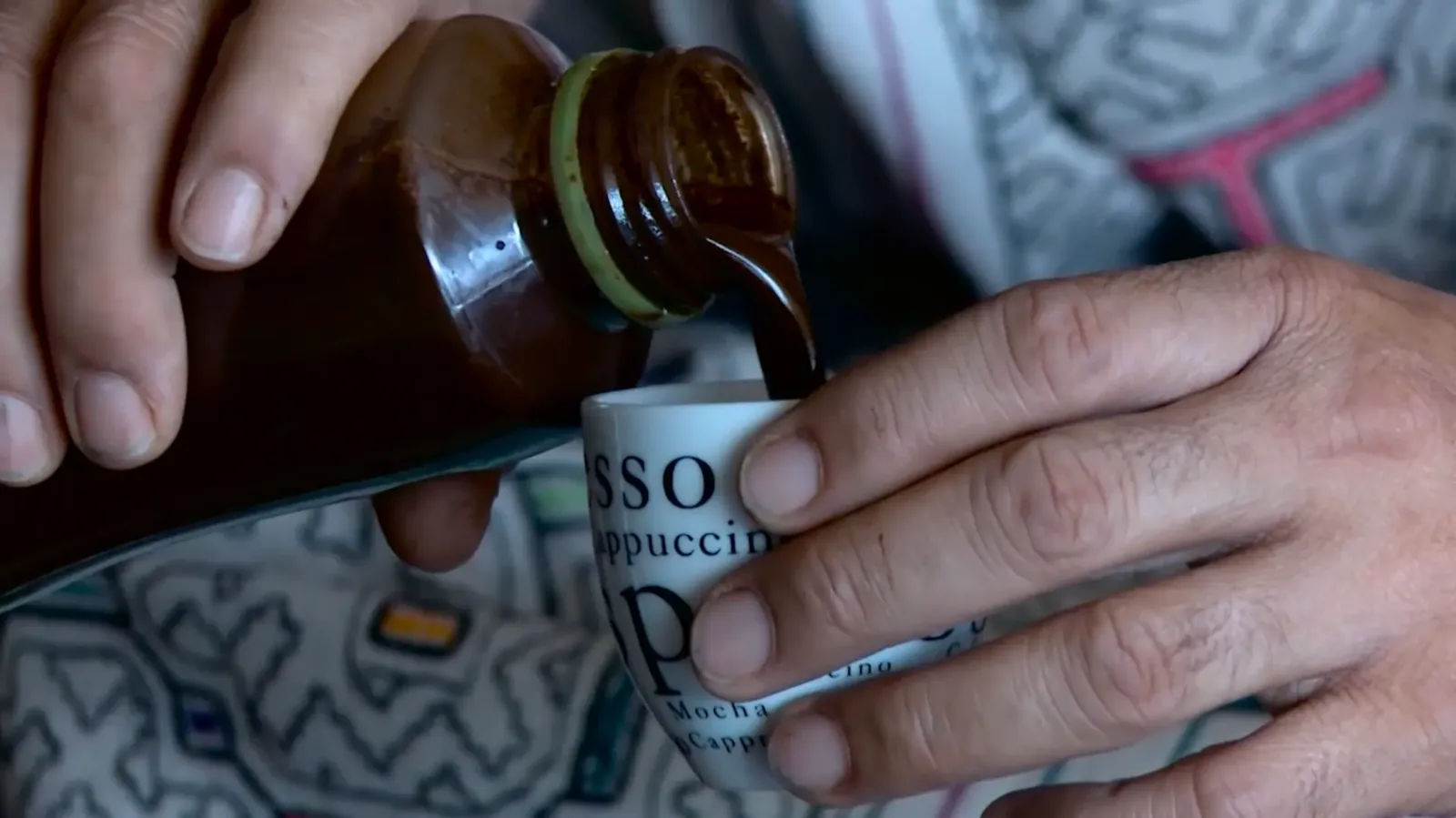
Ayahuasca brew being poured into a small cup during a private ceremony
Plant-medicine sessions are prepared and supervised; eligibility is decided case by case.
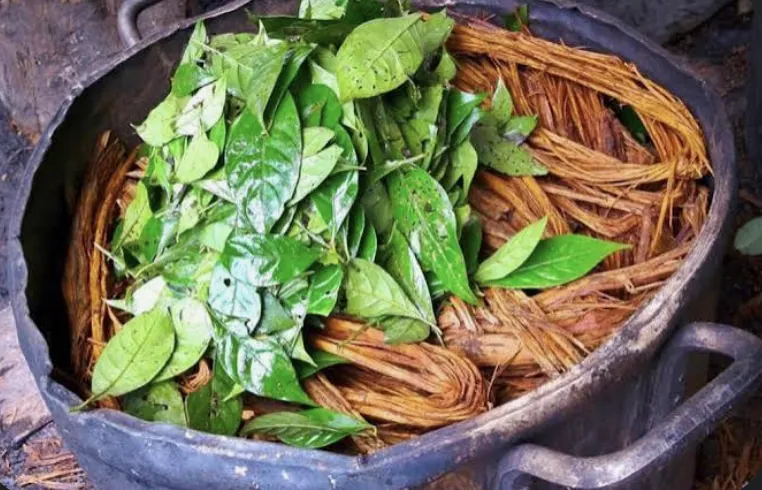
Ayahuasca vine bark and chacruna leaves in a traditional pot before brewing
Traditional preparation of the ayahuasca brew from vine and leaf.
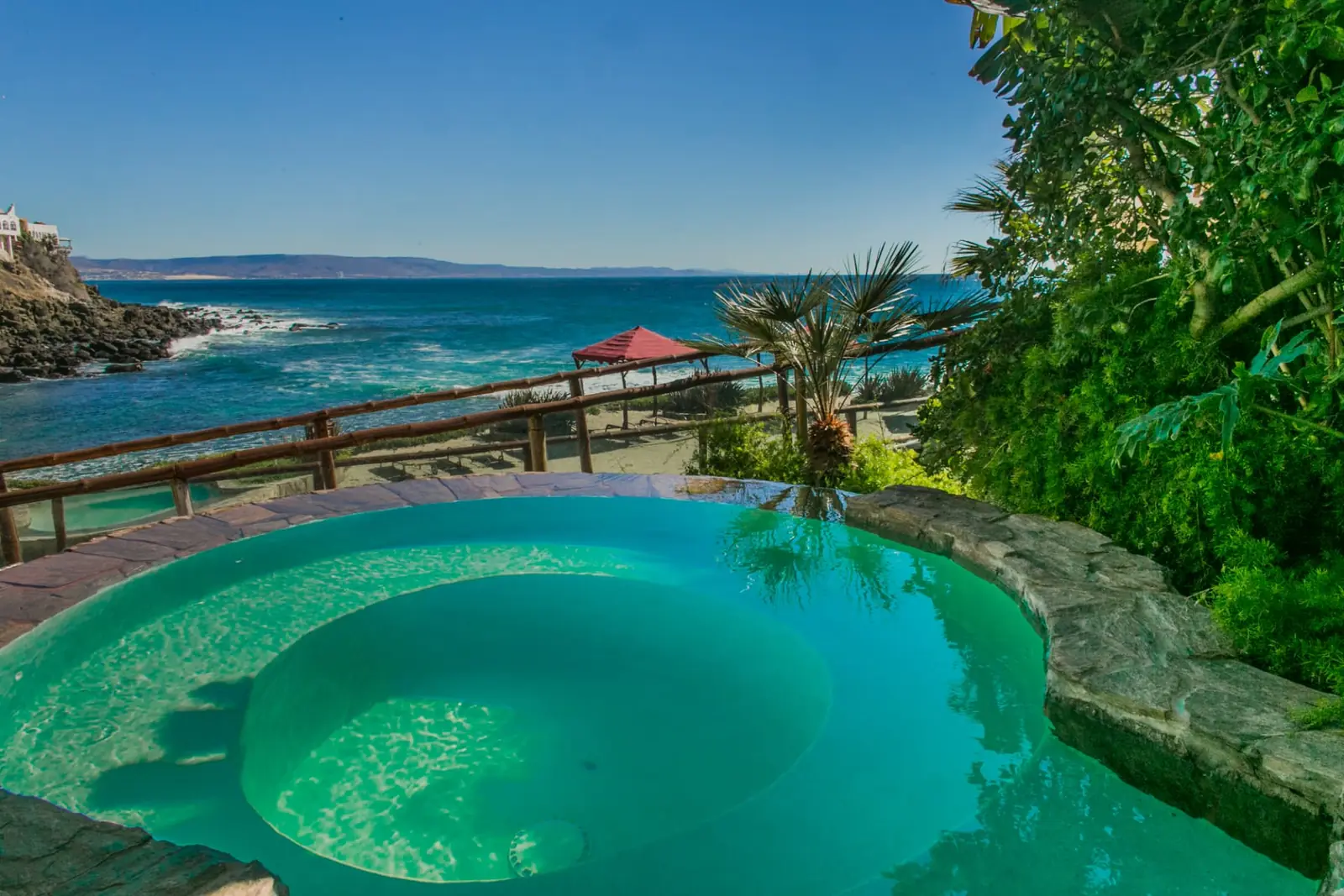
Stone jacuzzi on a garden terrace with the ocean and beach shelters behind
One of several quiet outdoor spaces used for rest during the day.
Prepared massage table on a palm-framed balcony above the ocean at Holistic Sanctuary
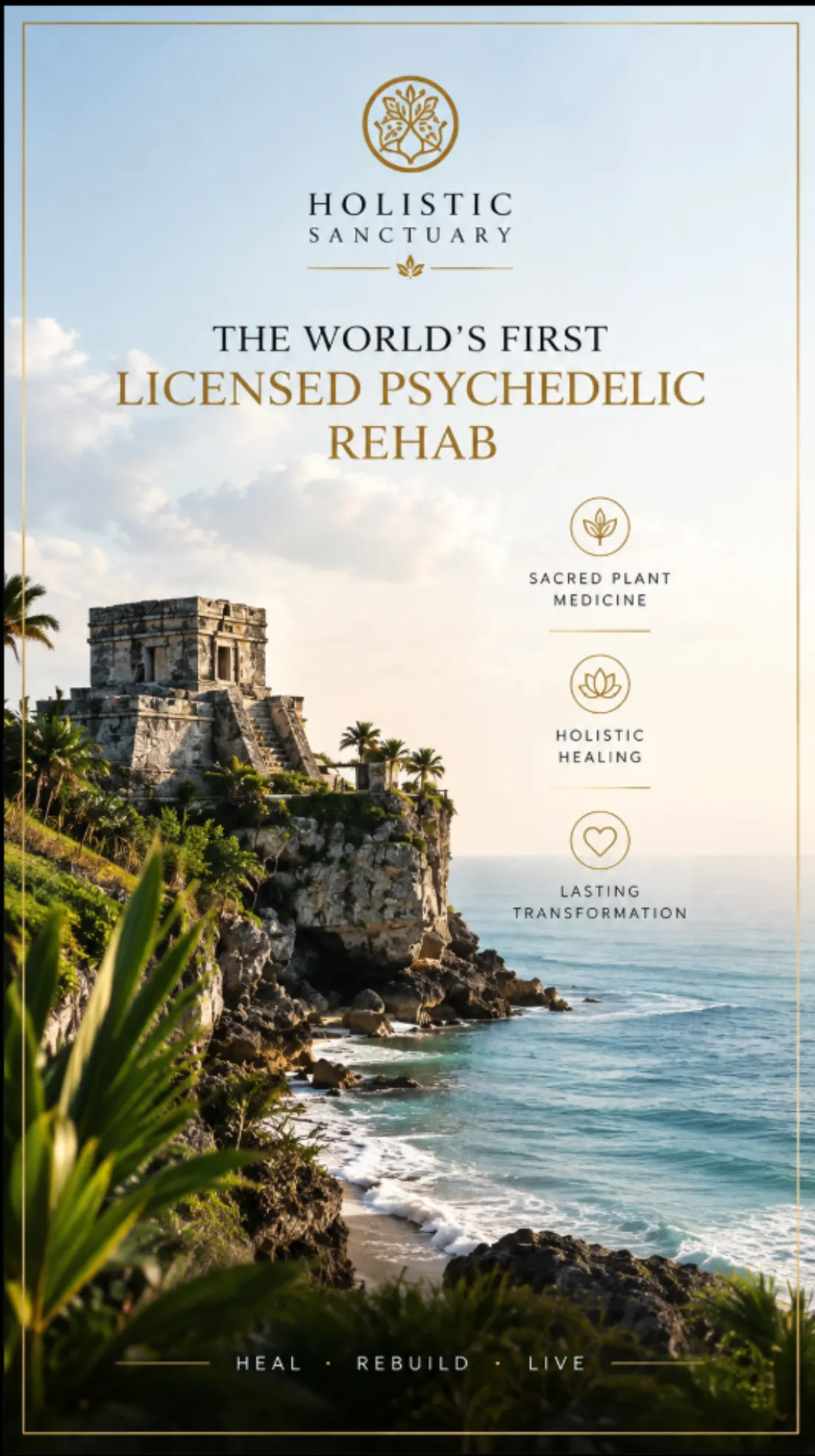
Holistic Sanctuary infographic describing a licensed psychedelic programme with sacred plant medicine, holistic healing and lasting transformation
Psychedelic-assisted sessions are licensed and supervised in Mexico; suitability depends on medical screening.
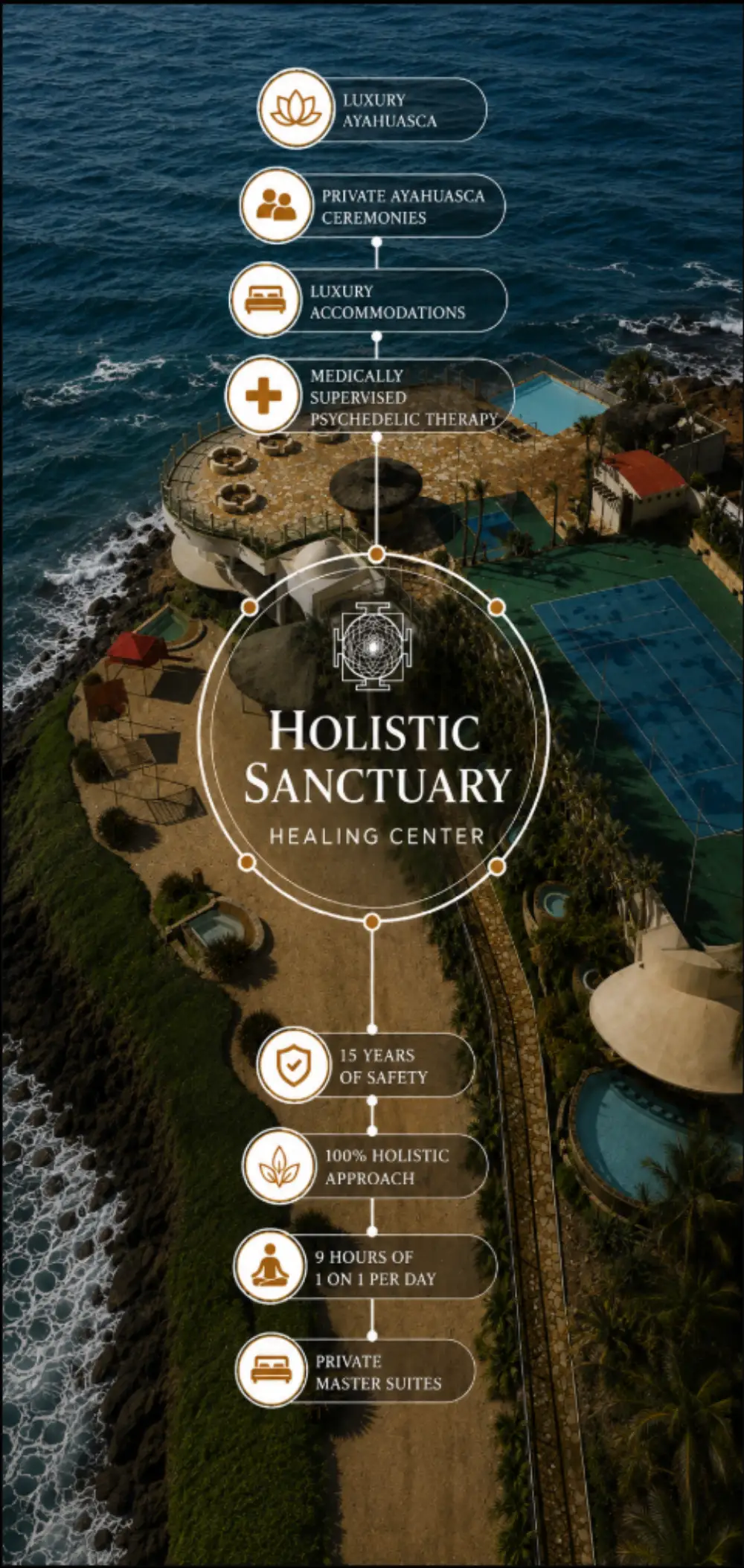
Holistic Sanctuary infographic on private luxury ayahuasca ceremonies, medically supervised psychedelic therapy, private master suites and nine hours of one-to-one care per day
Ayahuasca ceremonies are private and supervised; participation follows medical and medication screening.
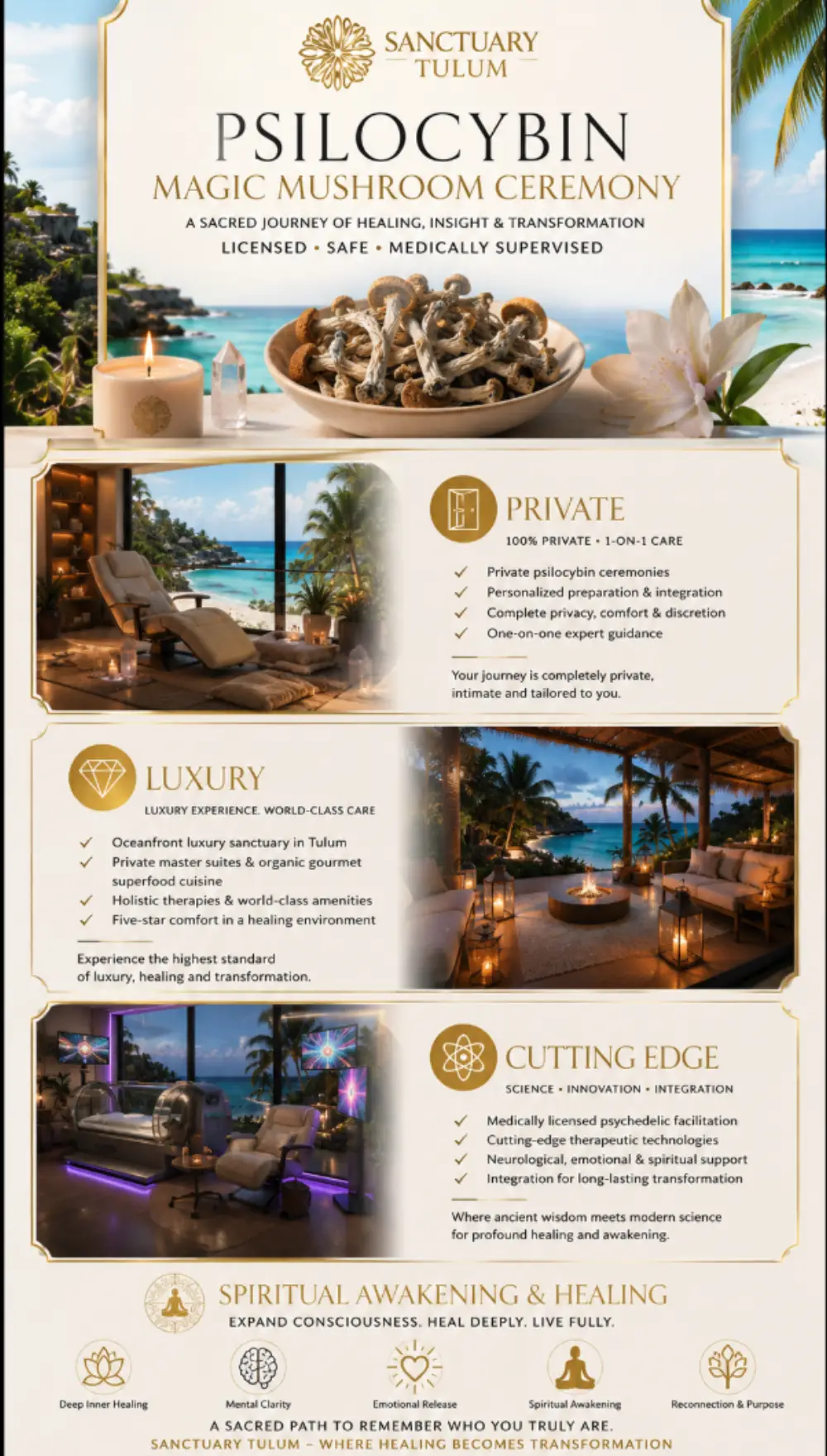
Sanctuary Tulum infographic on private psilocybin ceremonies: one-to-one care, personalised preparation and integration, oceanfront luxury accommodation and medically supervised facilitation
Private psilocybin ceremonies with preparation and integration. Suitability depends on medical and medication screening.
Private oceanfront suite at the Holistic Sanctuary luxury ayahuasca retreat, with a king bed, candles and a sunset ocean view
A private oceanfront suite used by guests attending the luxury ayahuasca retreat programme.

Process

Preparation.

Preparation is clinical work, not paperwork. It covers the person's history and current stressors, what they expect and where those expectations are unrealistic, how distress during a session will be handled, and what will be asked of them afterwards.

Setting and expectation shape the acute experience substantially, which is one reason controlled trials of these compounds are so difficult to blind. That same sensitivity is why unprepared sessions in unfamiliar surroundings carry more risk of a distressing outcome.

What preparation does not do

It does not remove risk, and it does not make an unsuitable candidate suitable. If preparation surfaces an active psychotic illness, unstable cardiac disease, or an interaction that cannot be safely managed, the answer is no.

Process

Screening.

Screening determines whether supervised psychedelic work is considered at all. It is carried out by clinicians before anything is scheduled, and it covers at minimum:

  • Personal and family psychiatric history, with particular attention to psychotic illness and bipolar I disorder.
  • Current suicidality and recent self-injury.
  • Cardiac history, examination and ECG where indicated — mandatory before any consideration of ibogaine.
  • Hepatic and renal function, and relevant metabolic screening.
  • A full medication review, including SSRIs, SNRIs, MAO inhibitors, lithium, tramadol and stimulants.
  • Pregnancy status, and substance use that may complicate withdrawal or interaction risk.

Declining a candidate is a normal outcome of screening. A programme that never says no is not screening.

Safety

Medical considerations.

Psychiatric

Personal or family history of schizophrenia, psychotic illness, or bipolar I disorder is treated as a contraindication for classic psychedelics. Acute anxiety, confusion, and distressing experiences during sessions are common enough that continuous attendance by staff is standard rather than optional.

Cardiovascular

Ibogaine is associated with QT-interval prolongation and cardiac arrhythmia, and deaths have been reported in unmonitored settings. Cardiac assessment before administration is mandatory here, and a resident who does not clear it does not receive it. Several psychedelics also transiently raise blood pressure and heart rate.

Drug interactions

Ayahuasca contains MAO-inhibiting beta-carbolines, which can interact dangerously with serotonergic medication including SSRIs and SNRIs. Every admission includes a full medication review by a physician for exactly this reason. No one should stop prescribed psychiatric medication abruptly or without medical supervision.

What we will not say

That any of this is risk-free, guaranteed, permanent, or a cure. It is not. Anyone considering psychedelic therapy should discuss it with a physician who knows their medical history — including, and especially, if that conversation leads them somewhere other than here.

Process

Integration.

Integration is the work of turning an acute experience into changed behaviour. In the trials with the most credible results, dosing sessions were embedded in a course of psychological support, and the therapy component cannot be separated from the reported effect.

Here, integration runs across the remaining weeks of residency: psychological sessions, sleep and nutrition, movement, and concrete planning for the environment a person is returning to. Continuing care after discharge is arranged rather than assumed.

Why it is the part most often skipped

Integration is slow, unglamorous, and difficult to market. It is also the part most likely to determine whether anything durable comes of a session, which is why a single-session model with no follow-up should be treated with scepticism.

How we work

Supervision is the whole difference.

  1. 01

    Screening before scheduling

    Psychiatric history, family history of psychosis or bipolar disorder, cardiac history, ECG where indicated, hepatic function, and a full medication review — particularly serotonergic drugs and MAO inhibitors.

  2. 02

    One on One, never group

    Sessions are attended individually with staff present throughout. Group ceremony formats are common in the retreat sector; they are not how this work is done here.

  3. 03

    Medical cover on site

    Nursing cover 24 hours a day and physician oversight, with cardiac monitoring where the modality demands it. Ibogaine in particular is never administered without prior cardiac clearance.

  4. 04

    Preparation and integration

    The session is the shortest part of the process. Preparation beforehand and structured integration afterwards, over weeks of residency, is where most of the therapeutic work happens.

Plain reading

What the research actually shows.

A fair summary in one paragraph: psilocybin has repeatedly produced rapid, clinically meaningful reductions in depression scores in small randomized trials, without demonstrating superiority to an established antidepressant on a primary outcome. MDMA-assisted therapy produced positive phase 3 results for PTSD that the FDA judged insufficient for approval. Ayahuasca and 5-MeO-DMT rest on small early trials and observational data. Ibogaine has no completed randomized trials and a documented cardiac risk. None of these compounds is approved for these uses.

The methodological problems are shared across the field: small samples, participants who can usually tell whether they received the active compound, strong expectancy effects, highly selected volunteers, short follow-up, and outcome measures that rely on self-report or unblinded raters.

What does not count as evidence

Commercial investment does not. Acquisitions, valuations and funding rounds in the psychedelic sector reflect expectations about future markets and regulatory outcomes; they are not clinical findings and they say nothing about whether a compound works.

Language we avoid

We do not say that a psychedelic "resets" the brain, repairs neurochemistry, cures a diagnosis, or works for everyone. Those claims outrun the published data. Where a mechanism is a hypothesis under investigation, this page says so.

References

Primary sources.

  1. 01Carhart-Harris R et al. Trial of psilocybin versus escitalopram for depression. N Engl J Med (2021). Source
  2. 02Goodwin GM et al. Single-dose psilocybin for a treatment-resistant episode of major depression. N Engl J Med (2022). Source
  3. 03Bogenschutz MP et al. Percentage of heavy drinking days following psilocybin-assisted psychotherapy vs placebo in alcohol use disorder: a randomized clinical trial. JAMA Psychiatry (2022). Source
  4. 04Mitchell JM et al. MDMA-assisted therapy for moderate to severe PTSD: phase 3 randomized trial. Nat Med (2023). Source
  5. 05FDA — Complete Response Letter for midomafetamine (MDMA) capsules, August 2024, requesting additional trials. Source
  6. 06Palhano-Fontes F et al. Rapid antidepressant effects of the psychedelic ayahuasca in treatment-resistant depression: a randomized placebo-controlled trial. Psychol Med (2019). Source
  7. 07Cherian KN et al. Magnesium–ibogaine therapy in veterans with traumatic brain injury. Nat Med (2024) — observational. Source
  8. 08Koenig X, Hilber K. The anti-addiction drug ibogaine and the heart. Molecules (2015) — QT prolongation and cardiac risk. Source
  9. 09Ly C et al. Psychedelics promote structural and functional neural plasticity. Cell Rep (2018) — preclinical. Source
  10. 10Nutt D, Carhart-Harris R. The current status of psychedelics in psychiatry. JAMA Psychiatry (2021) — review. Source

Related

Ibogaine

Ibogaine Treatment

A comprehensive, evidence-led resource on ibogaine: pharmacology, the research base, cardiac risk, candidacy, preparation and integration.

Ibogaine

Ibogaine Safety

QT prolongation, arrhythmia risk, CYP2D6 metabolism, drug interactions and electrolytes — what the safety literature establishes and what remains uncertain.

Psychedelic Therapy

Ibogaine Versus Other Psychedelics

A factual comparison of ibogaine, psilocybin, 5-MeO-DMT, ayahuasca and LSD across pharmacology, duration, research maturity and risk.

Mental Health

Holistic Mental Health Treatment

An integrative approach to PTSD, trauma, depression and anxiety that treats sleep, nutrition, environment and behavior as clinical variables.

Insights

Latest Insights

Browse all insights

Benzodiazepine Treatment

Benzodiazepine Detox

Benzo detox and withdrawal treatment: a physician-directed taper, twenty-four hour monitoring, nine hours of daily therapy and the in-house Brain Repair IV protocol.

Ibogaine

Best Ibogaine Treatment Centers

A consumer guide to evaluating an ibogaine provider: screening, cardiac assessment, medical oversight, emergency preparedness and transparency.

Benzodiazepine Treatment

Holistic Benzodiazepine Treatment

Physician-supervised benzodiazepine detox and withdrawal support: gradual tapering, nine hours of daily one-to-one therapy, the in-house Brain Repair IV protocol, and whole-body restoration in a private oceanfront setting.

Mental Health

Holistic Mental Health Treatment

An integrative approach to PTSD, trauma, depression and anxiety that treats sleep, nutrition, environment and behavior as clinical variables.

Holistic Treatment

Holistic Rehab

Rehabilitation as system repair: mental health, behavior, environment, nutrition and sleep, with specialized medical support where it is needed.

Ibogaine

Ibogaine Integration

Why the weeks after an experience matter: reflection, behavior, sleep, nutrition, relationships, meaning and ongoing professional support.

Ibogaine

Ibogaine Preparation

Medical, psychological and practical preparation: history, medication review, ECG, laboratory assessment, consent and integration planning.

Ibogaine

Ibogaine Safety

QT prolongation, arrhythmia risk, CYP2D6 metabolism, drug interactions and electrolytes — what the safety literature establishes and what remains uncertain.

Begin a private consultation.

Admissions is a confidential clinical conversation, not a sales call. We review history, current medication, and goals before anyone is accepted.