
Holistic Treatment
Holistic Treatment Center
What an integrative treatment center actually does: clinical oversight, nutrition, environment and individualized programming under one roof.
Pouyan Method
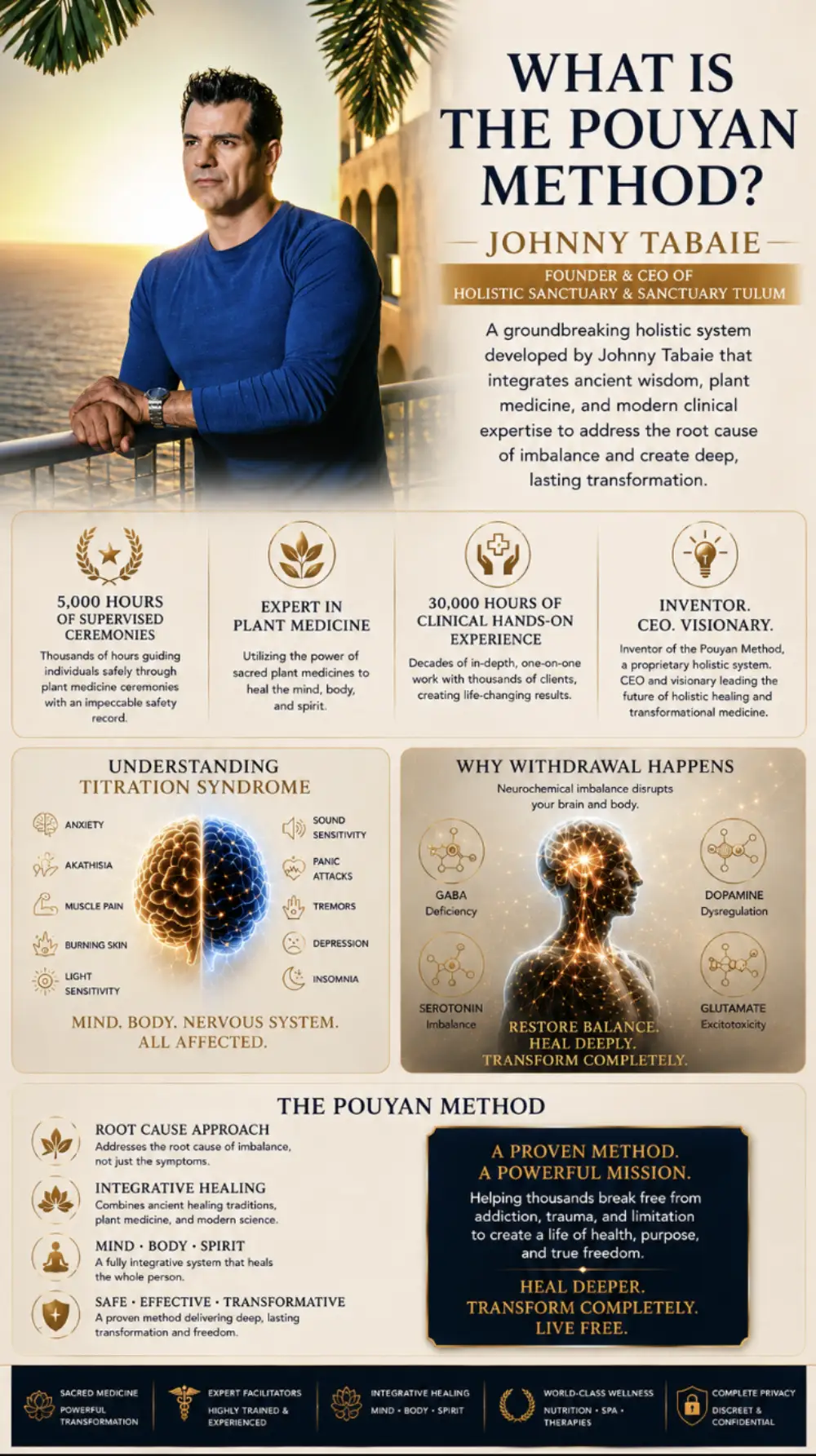
Pouyan Method is the framework Johnny Tabaie developed to order residential care at Holistic Sanctuary. Its value is in the sequencing — medical stabilisation before therapeutic work, restoration alongside it, and integration built into the length of stay rather than left to the resident afterwards.
What it is
Most treatment failures we hear about are not failures of any single component. They are failures of order. Therapeutic work is attempted before withdrawal is stable. Nutrition and sleep are treated as amenities rather than as prerequisites for mood regulation. Intensive work is done and then integration is left entirely to the fortnight after discharge, when the resident is back inside the environment that produced the problem.
Pouyan Method is our answer to that: four stages, in a fixed order, with the content of each stage written per person. It has run at Holistic Sanctuary since 2011 and is revised as clinical practice and published evidence change.
It is a treatment framework, not a regulatory category. It has not been evaluated by the FDA, it is not a cure for any condition, and it does not produce a guaranteed outcome. What it does is make sure that no part of a residency happens out of sequence.
The four stages
Physician-led intake, laboratory and cardiac work where indicated, medication reconciliation, and supervised withdrawal management if dependence is present. Nothing else begins until this is done.
Nutrition, sleep, movement, and supportive modalities — IV protocols, hyperbaric oxygen, PEMF, red light, sauna and cold exposure — to address the depletion that chronic illness and dependence produce.
One on One psychotherapy, and where clinically appropriate and cleared, supervised psychedelic sessions with staff present throughout. Individual, never group.
Structured work over the remaining weeks on what a resident returns to: environment, relationships, ongoing clinical care, prescriptions, and aftercare arranged before discharge.
Conceptual framework
The four stages describe when things happen. The six dimensions below describe what is being attended to at each stage. They are organising categories developed in clinical practice at Holistic Sanctuary — a way of making sure nothing consequential is left unexamined — rather than validated constructs drawn from a published model.
Baseline biology first: laboratory work, metabolic and nutritional status, hydration, hepatic and cardiac function, and the physical depletion that chronic illness, medication and dependence produce.
Sleep architecture, stress response, and the neurochemical and neuroplastic changes associated with prolonged substance exposure or untreated mental illness. Described as an area of active research, not as a repaired mechanism.
Where a person is, who is around them, what is available to them, and what the day is structured around. Environment is treated as a clinical variable rather than as scenery.
Attention, meaning, self-narrative and, where clinically appropriate and cleared, supervised psychedelic sessions. This dimension is the most speculative and is handled with the most caution.
The repeated actions that maintain a pattern — sleep and waking, eating, movement, avoidance, compulsive routines — and the deliberate practice of replacing them while support is still present.
Carrying change out of a controlled setting and into an ordinary life: relationships, work, ongoing clinical care and prescriptions, with aftercare arranged before discharge.
Interdependence
Mental health and physical wellbeing are not separable in practice. Disrupted sleep degrades mood regulation and impulse control; poor nutritional status affects energy, cognition and recovery; inactivity and chronic stress feed back into both. These relationships are well documented individually, and treating any one of them in isolation tends to be undone by the others.
Environment and behaviour sit on top of that. A person can make substantial changes inside a controlled residential setting and lose them within weeks of returning to an environment that reliably re-triggers the pattern. That is why environment is planned for before discharge rather than discussed after it.
Advanced wellness modalities occupy a supportive position in this picture: they are intended to help restore physiological capacity so that psychological work is possible, not to substitute for it. Where a supervised psychedelic session is clinically appropriate and medically cleared, it occupies a similar position — one component inside a longer process, entirely dependent on preparation and integration around it.
None of these components is offered to everyone. What is used, and in what order, is decided per person by clinicians after assessment.
Component group
The Superhuman Protocol is our internal name for the physiological restoration group used in stage two. It is a grouping, not a product, and it has not been tested as a single combined treatment system in any controlled trial. Each modality carries its own separate and largely preliminary evidence base, summarised below.
Approved medical indications exist for specific conditions; research outside them is expanding but preliminary. Used here as a supportive modality, not as a treatment for depression or dependence.
Red and near-infrared light. Small human trials with mixed results across pain, tissue recovery and mood; mechanistic work is largely preclinical.
Pulsed electromagnetic field therapy. Cleared for certain orthopaedic uses; evidence in mood, sleep and general recovery remains limited and inconsistent.
Observational and small trial data on mood, inflammatory markers and subjective alertness. Contraindicated in some cardiac presentations, so it is prescribed rather than offered universally.
Cohort data associate regular sauna use with cardiovascular and mortality outcomes; those are observational associations, not demonstrated treatment effects in mental illness.
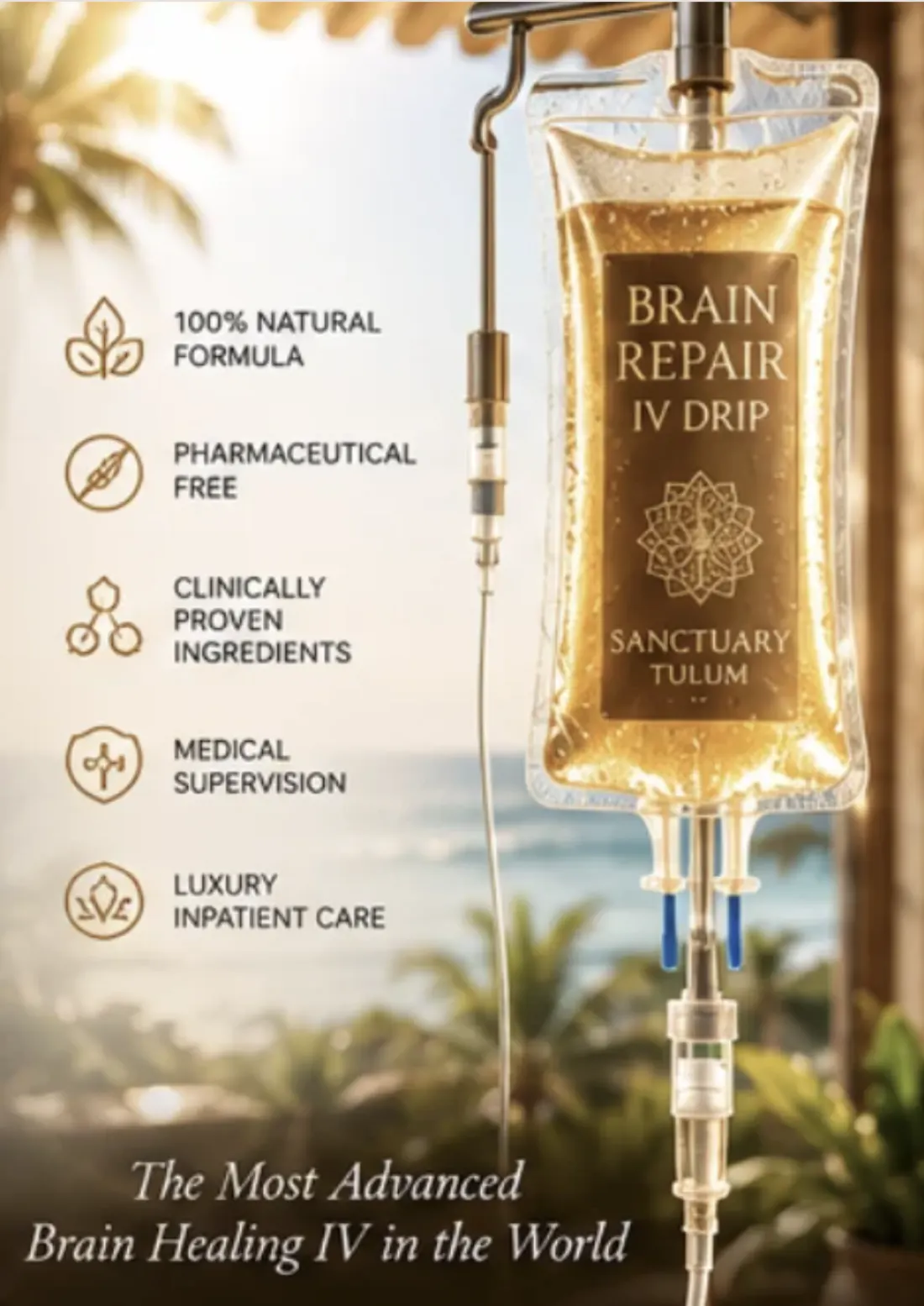
Used to correct documented deficiencies and support hydration and recovery under physician oversight. It is not a demonstrated treatment for psychiatric conditions.
An individually designed programme addressing deficiency, blood-sugar stability, protein intake and sleep-supportive timing. The best-supported element in this group, and the least glamorous.
Modalities in this group are selected against a person's medical history and contraindications. They are supportive measures. They are not treatments for depression, PTSD or substance dependence, and we do not describe them as such.
Component group
The Supernatural Protocol is our internal name for the supervised psychedelic component of stage three, used only where clinically appropriate, medically cleared and individually attended. Grouping these compounds under one heading is a matter of scheduling convenience, not pharmacology: they differ substantially in mechanism, duration, evidence base and risk profile, and they are not interchangeable.
The strongest randomized dataset of the classic psychedelics, principally in treatment-resistant depression and alcohol use disorder. Trials are small, follow-up is short, and no indication is approved.
Short-acting, rapid onset. Early-phase trials of synthetic formulations in treatment-resistant depression plus observational reports. Durability and repeat dosing are unknown.
One small randomized placebo-controlled trial in treatment-resistant depression and substantial observational literature. Its MAO-inhibiting content creates real interaction risk with serotonergic medication.
No completed randomized controlled trials, observational cohorts in opioid dependence, and documented QT prolongation and cardiac deaths. Never administered without prior cardiac clearance.
No psychedelic compound is FDA-approved for depression, PTSD or substance dependence. Personal or family history of psychotic illness or bipolar I disorder is treated as a contraindication for classic psychedelics, and cardiac clearance is mandatory before ibogaine is considered at all. A fuller account is on the psychedelic therapy page.
The hypothesis
The premise underneath Pouyan Method is simple to state. If health is influenced by interconnected systems — physiology, neurobiology, environment, consciousness and behaviour — then addressing several of them coherently, in sequence, within a controlled setting, may be worth exploring for people who have not been helped by narrower approaches.
That is a hypothesis and a way of organising care. It is not universal clinical proof. No published study evaluates the Pouyan Method as a whole, and we hold no controlled long-term follow-up data on it.
What can be said with confidence is narrower and more useful: several of the individual components have solid evidence behind them, several have preliminary evidence, and a few are experimental. The framework's contribution is the order and the supervision, not a claim that the combination has been proven.
We would rather be accurate about that than persuasive about it. Anyone weighing this approach should discuss it with a physician who knows their history, and should treat any provider unwilling to name the limits of their own model with caution.



Advanced wellness modalities
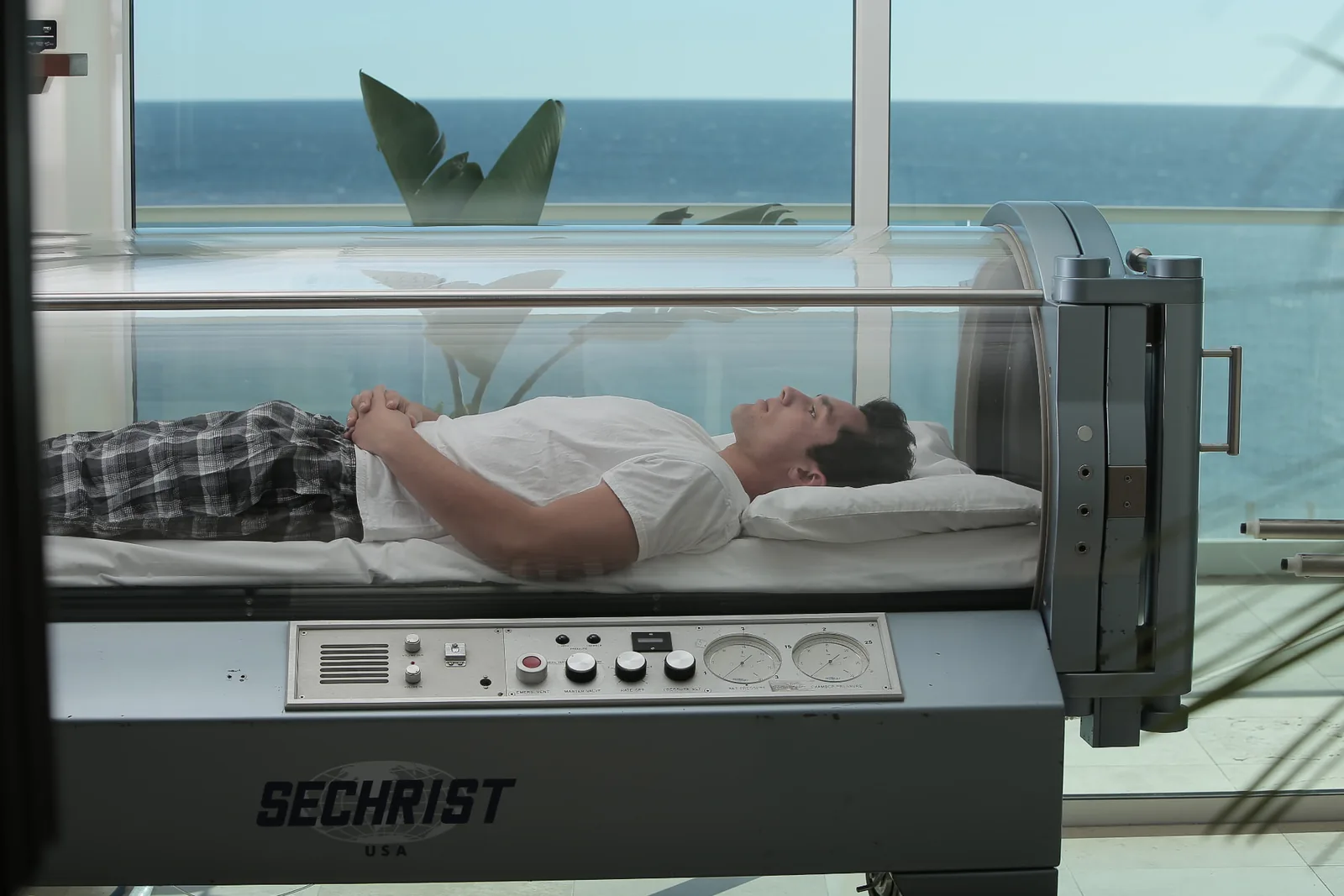
IV nutrient and amino-acid protocols, hyperbaric oxygen therapy, PEMF, red and near-infrared light, infrared sauna, and cold exposure — alongside an individually designed nutrition and sleep programme. These sit in stage two and continue through the residency.
It varies, and mostly it is early. Hyperbaric oxygen has clear approved medical indications and an expanding research literature outside them. Photobiomodulation and PEMF have small human trials with mixed results. Sauna and cold exposure have observational and small trial data. None of these should be presented as treatments for depression or addiction, and we do not present them that way.
A widely repeated claim holds that hyperbaric oxygen "adds twenty years to your life." It does not follow from the research. The relevant Israeli study examined older adults undergoing repeated HBOT sessions and reported increases in telomere length in certain peripheral blood cell populations along with reduced senescent cell counts. Telomere length in blood cells is a biomarker. It is not a measure of lifespan, and no study has shown that HBOT extends human life.
We correct this deliberately, because a facility that repeats a convenient misinterpretation of one study should not be trusted with the interpretation of any other.

References
Explore
The framework applied to alcohol, benzodiazepine, and opioid dependence.
Read moreThe framework applied to depression, PTSD, anxiety, and trauma.
Read moreHow supervised sessions are screened, attended, and integrated.
Read moreThe licensed setting the framework runs inside.
Read moreScope of care, licensing, and exclusions.
Read moreThe founder who developed the framework.
Read moreRelated
Holistic Treatment
What an integrative treatment center actually does: clinical oversight, nutrition, environment and individualized programming under one roof.
Psychedelic Therapy
An editorial review of what the psychedelic research actually shows, compound by compound, with the screening and safety considerations that come with it.
Insights
Benzodiazepine Treatment
Benzo detox and withdrawal treatment: a physician-directed taper, twenty-four hour monitoring, nine hours of daily therapy and the in-house Brain Repair IV protocol.
Ibogaine
A consumer guide to evaluating an ibogaine provider: screening, cardiac assessment, medical oversight, emergency preparedness and transparency.
Benzodiazepine Treatment
Physician-supervised benzodiazepine detox and withdrawal support: gradual tapering, nine hours of daily one-to-one therapy, the in-house Brain Repair IV protocol, and whole-body restoration in a private oceanfront setting.
Mental Health
An integrative approach to PTSD, trauma, depression and anxiety that treats sleep, nutrition, environment and behavior as clinical variables.
Holistic Treatment
Rehabilitation as system repair: mental health, behavior, environment, nutrition and sleep, with specialized medical support where it is needed.
Ibogaine
Why the weeks after an experience matter: reflection, behavior, sleep, nutrition, relationships, meaning and ongoing professional support.
Ibogaine
Medical, psychological and practical preparation: history, medication review, ECG, laboratory assessment, consent and integration planning.
Ibogaine
QT prolongation, arrhythmia risk, CYP2D6 metabolism, drug interactions and electrolytes — what the safety literature establishes and what remains uncertain.
Admissions is a confidential clinical conversation, not a sales call. We review history, current medication, and goals before anyone is accepted.