
Holistic Treatment
Holistic Rehab
Rehabilitation as system repair: mental health, behavior, environment, nutrition and sleep, with specialized medical support where it is needed.
Holistic treatment center
The phrase covers everything from a yoga retreat to a hospital wing. Here is a precise account of what Holistic Sanctuary means by it: a licensed, physician-supervised residential center where medical care, psychological work, and restorative therapy are delivered to one person at a time.
Definition
In the United States, "holistic" is not a licensing category. It describes an intention — treating the person rather than a single symptom — and that intention is claimed by facilities with radically different levels of clinical capability. The distinction that matters to a prospective resident is not the word. It is whether a physician is responsible for care, whether nursing is present overnight, and whether the therapies on the brochure are sequenced by anyone with medical training.
The National Center for Complementary and Integrative Health uses the term integrative health for the deliberate combination of conventional and complementary approaches within a coordinated plan. That is the useful definition, and it is the one we work to. Complementary modalities support a medically supervised programme; they do not replace it.
Holistic Sanctuary is a licensed facility operating in Mexico since 2011. It is not a hospital, and it is explicitly not the right setting for acute psychiatric emergencies. Within its scope, care is residential, individual, and supervised.


Structure
Physician-led intake, laboratory work, cardiac review where a modality requires it, medication reconciliation, and nursing cover on site 24 hours a day.
One on One therapeutic sessions rather than group process work, with the frequency and modality set by the resident's presentation and history.
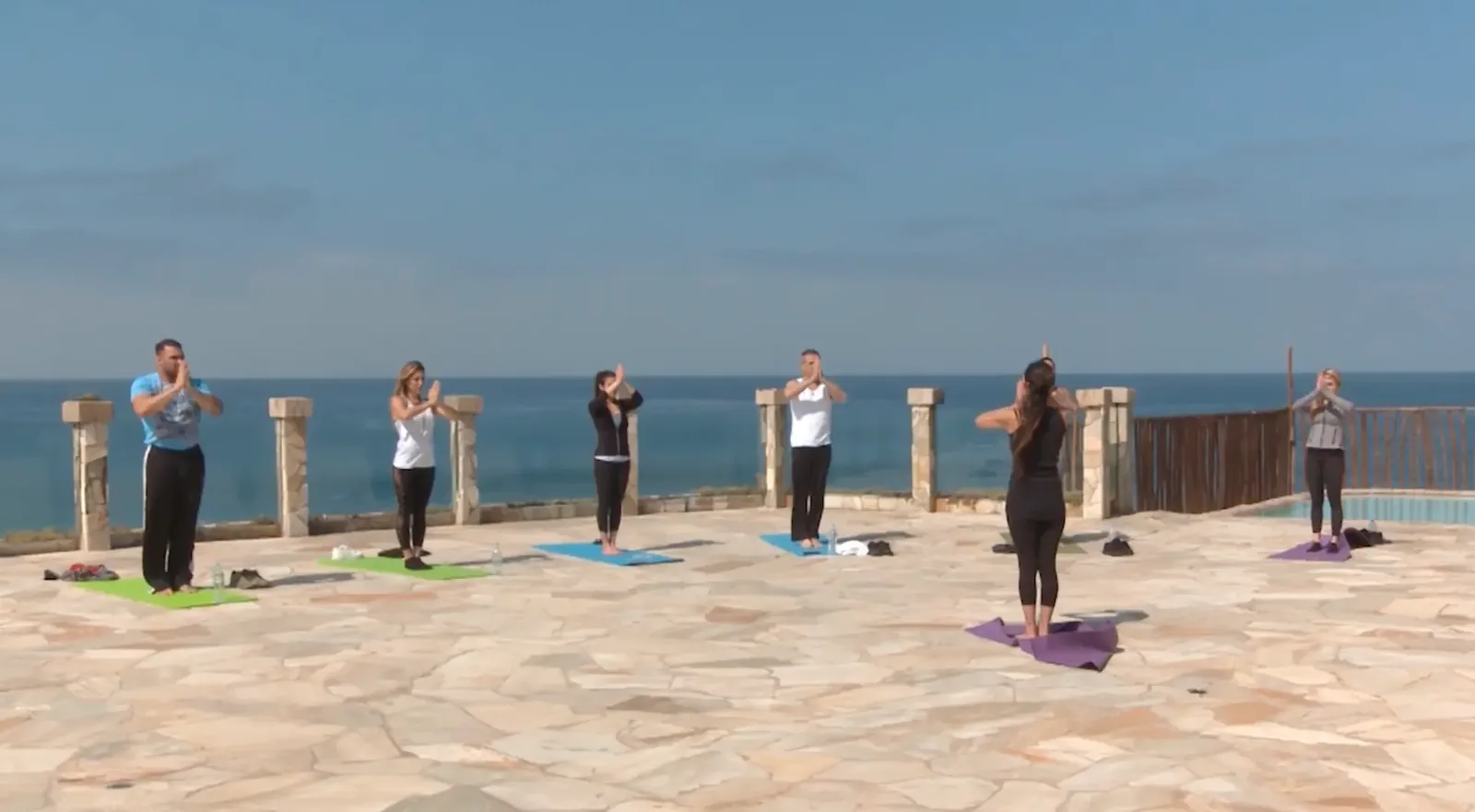
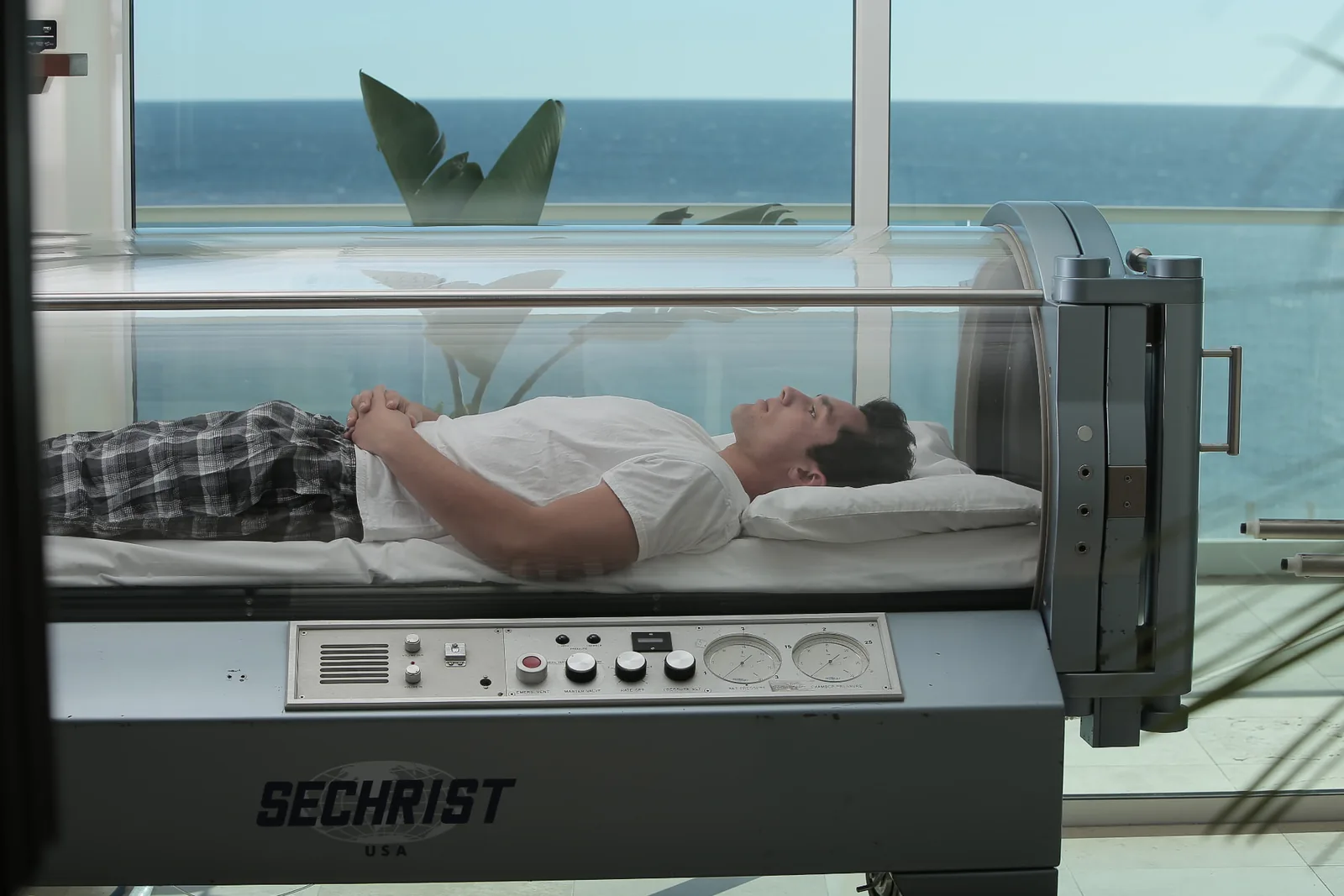
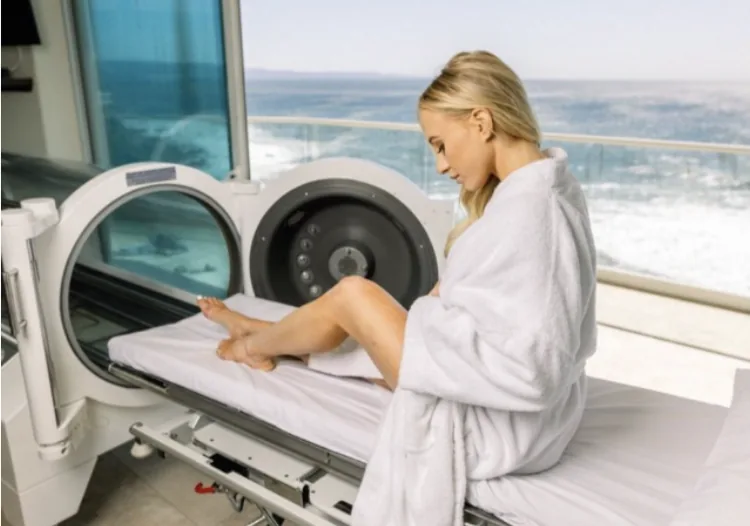
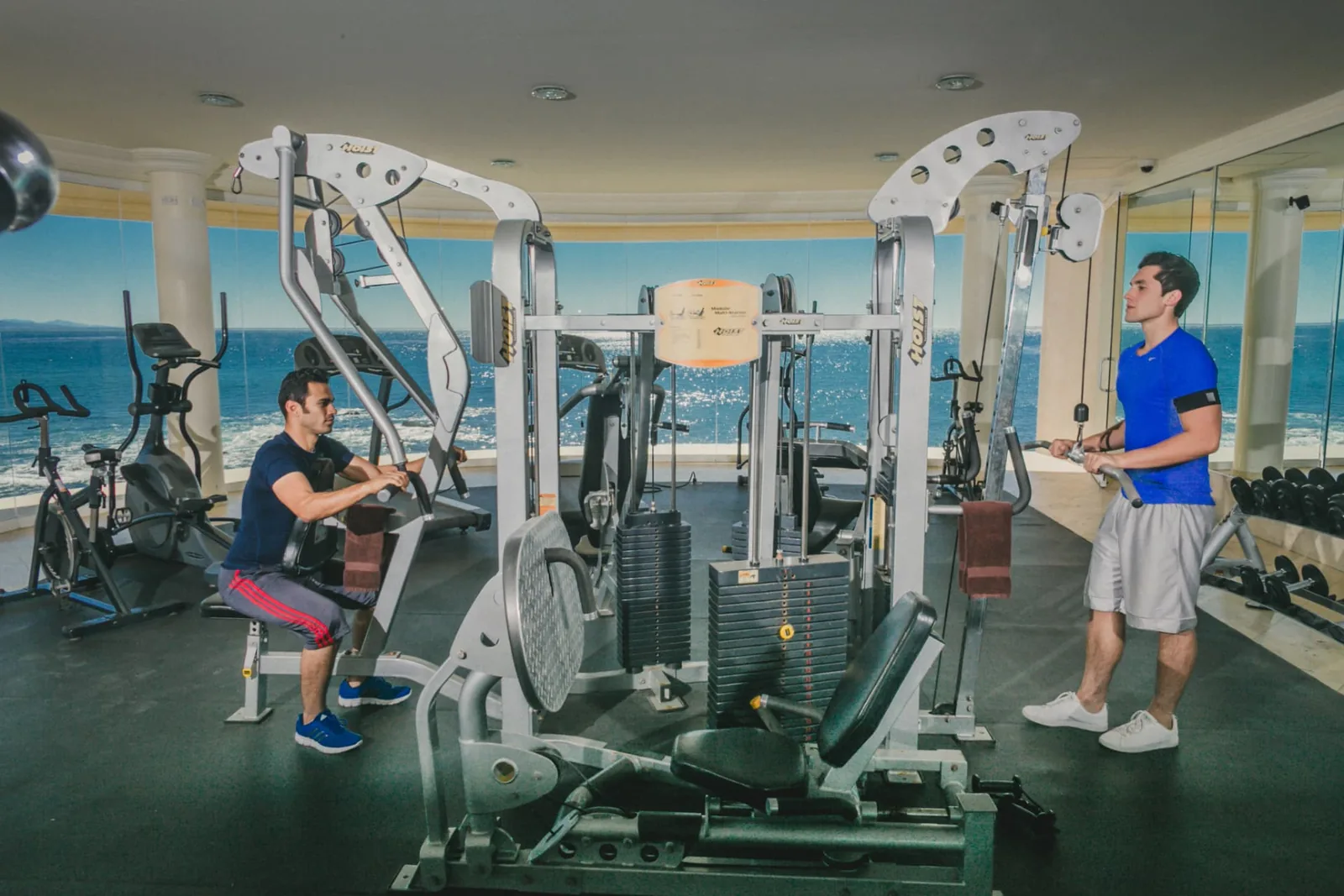
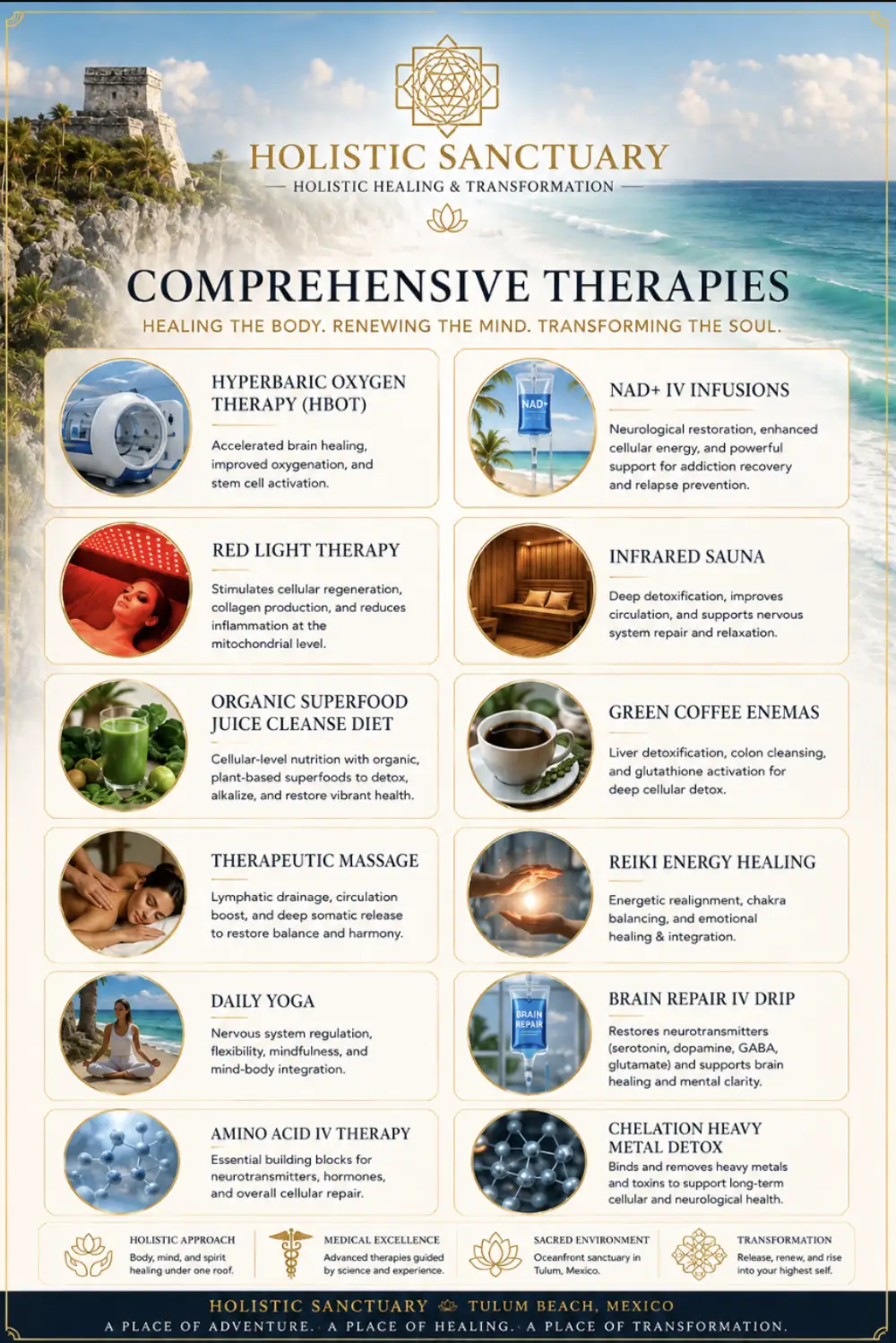
Nutrition, sleep structure, movement, and supportive modalities — IV protocols, hyperbaric oxygen, PEMF, red light, sauna and cold exposure — used as support, not as stand-alone treatment.


Practicalities
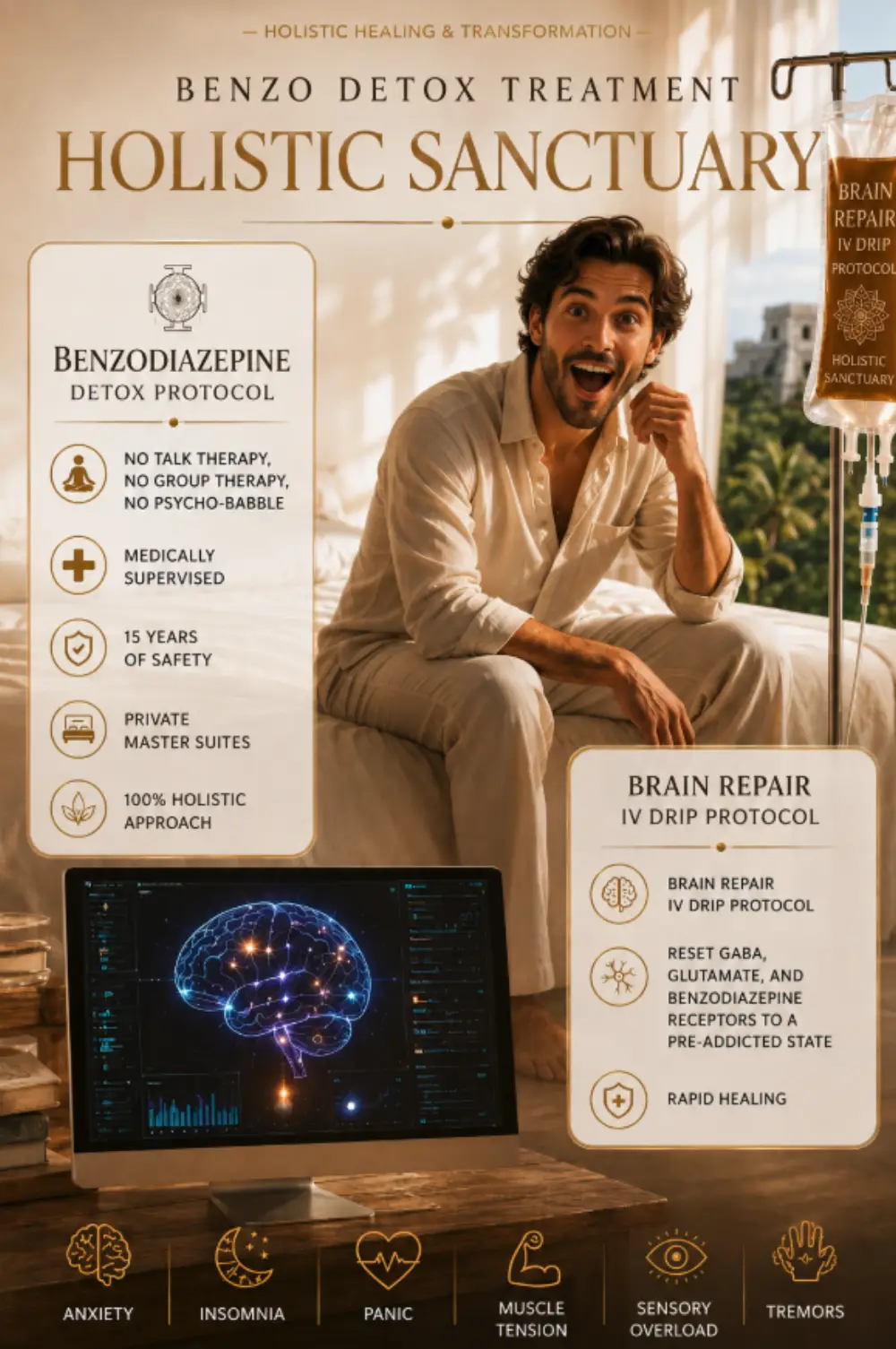
Four to twelve weeks. The figure is set at assessment and revised if the clinical picture changes. Longer-standing depression, complex trauma, and benzodiazepine dependence generally require the upper end of that range; compressing them is a clinical compromise, not an efficiency.
Private oceanfront residences in Tulum and Baja California, with a deliberately small number of residents on site so that One on One attention is a schedule rather than a slogan. Residents have private accommodation and are not required to participate in group programming.
Admissions begins with a confidential clinical conversation covering diagnosis history, current prescriptions, cardiac and hepatic history, and prior treatment. Certain findings — unstable cardiac disease, some psychiatric diagnoses, acute suicidality — are exclusions. Where a therapy carries specific cardiac risk, testing is mandatory and a resident who does not clear it does not receive it.
That the environment guarantees anything. Setting supports treatment; it does not perform it. Anyone selling the ocean as the active ingredient is selling a holiday.


References
Explore
Residential care for alcohol, benzodiazepine, and opioid dependence.
Read moreDepression, PTSD, anxiety, and trauma in a residential setting.
Read moreWhat the research supports, and how supervision works here.
Read moreThe framework that sequences all three layers of care.
Read moreThe center, its scope, and its exclusions.
Read moreWhy the center was built this way.
Read moreRelated
Holistic Treatment
Rehabilitation as system repair: mental health, behavior, environment, nutrition and sleep, with specialized medical support where it is needed.
Mental Health
An integrative approach to PTSD, trauma, depression and anxiety that treats sleep, nutrition, environment and behavior as clinical variables.
Pouyan Method
The proprietary framework developed by Johnny Tabaie: physiology, neurobiology, environment, consciousness, behavior and integration.
Insights
Benzodiazepine Treatment
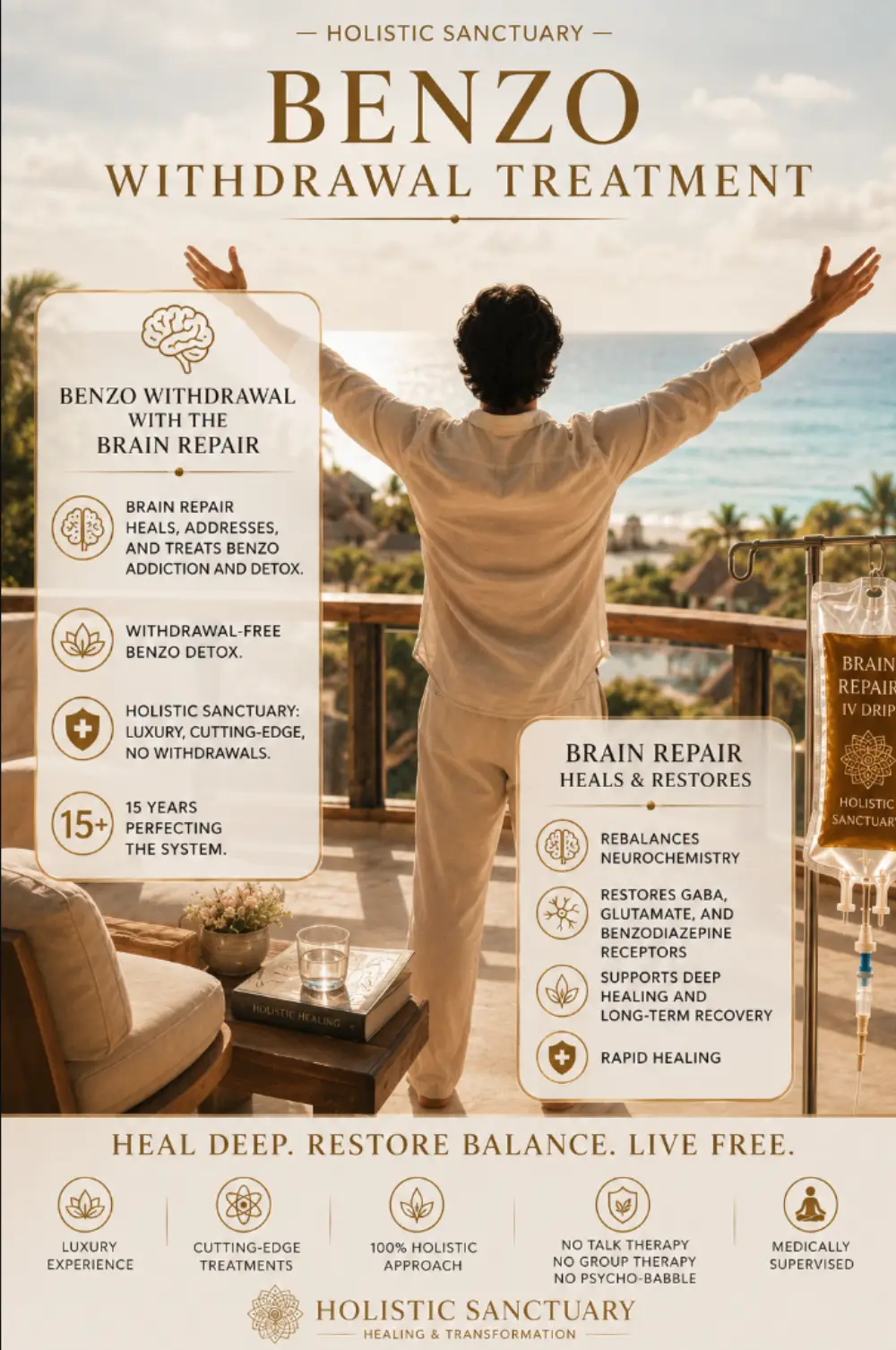
Benzo detox and withdrawal treatment: a physician-directed taper, twenty-four hour monitoring, nine hours of daily therapy and the in-house Brain Repair IV protocol.
Ibogaine
A consumer guide to evaluating an ibogaine provider: screening, cardiac assessment, medical oversight, emergency preparedness and transparency.
Benzodiazepine Treatment
Physician-supervised benzodiazepine detox and withdrawal support: gradual tapering, nine hours of daily one-to-one therapy, the in-house Brain Repair IV protocol, and whole-body restoration in a private oceanfront setting.
Mental Health
An integrative approach to PTSD, trauma, depression and anxiety that treats sleep, nutrition, environment and behavior as clinical variables.
Holistic Treatment
Rehabilitation as system repair: mental health, behavior, environment, nutrition and sleep, with specialized medical support where it is needed.
Ibogaine
Why the weeks after an experience matter: reflection, behavior, sleep, nutrition, relationships, meaning and ongoing professional support.
Ibogaine
Medical, psychological and practical preparation: history, medication review, ECG, laboratory assessment, consent and integration planning.
Ibogaine
QT prolongation, arrhythmia risk, CYP2D6 metabolism, drug interactions and electrolytes — what the safety literature establishes and what remains uncertain.
Admissions is a confidential clinical conversation, not a sales call. We review history, current medication, and goals before anyone is accepted.