
Ibogaine
Ibogaine Treatment
A comprehensive, evidence-led resource on ibogaine: pharmacology, the research base, cardiac risk, candidacy, preparation and integration.
Ibogaine safety
Ibogaine is not risk-free. Its documented harms are specific, largely cardiac, and concentrated in people with pre-existing disease, electrolyte disturbance, interacting medication or no medical supervision. This page sets out what the systematic reviews and peer-reviewed literature record, and what screening can realistically achieve.
Position
Two findings recur across reviews of ibogaine. The first is that a meaningful number of people report substantial reductions in opioid withdrawal and craving after supervised administration. The second is that ibogaine has been associated with serious medical complications and with deaths. A 2022 systematic review of 24 clinical studies including 705 participants reported both, and concluded that the compound warrants rigorous medically supervised research rather than uncontrolled adoption.
Forensic and toxicological reviews of fatalities associated with ibogaine consistently identify contributing factors: pre-existing cardiovascular disease, concurrent substance use, interacting medication, and absence of medical monitoring. That pattern is the strongest argument for structured screening. It is not an argument that screening makes the procedure safe, and we do not make that argument.
We do not use the phrases "perfect safety record", "100% safe" or "foolproof" about ibogaine or about anything else offered here. They are not descriptions of medicine.
Risk map
Ibogaine and noribogaine inhibit the hERG potassium channel that governs cardiac repolarisation. The result is lengthening of the QT interval, demonstrated in laboratory work and observed clinically. Because noribogaine has a long half-life, the effect can outlast the subjective experience.
Prolonged QT predisposes to torsades de pointes and other ventricular arrhythmias. Bradycardia is also commonly described. Forensic reviews of ibogaine-associated deaths identify cardiac mechanisms as the most frequent proximate cause.
A baseline 12-lead ECG with QTc measurement is the minimum standard. Abnormal or equivocal findings trigger specialist review and may end the process. Screening identifies risk; it does not make the intervention safe.
Additive QT prolongation is a central concern: certain antipsychotics, some antidepressants, several macrolide antibiotics and azole antifungals, ondansetron and methadone among others. A complete list of prescriptions, over-the-counter drugs and supplements is required.
Ibogaine is metabolised principally by CYP2D6. Genetic poor metabolisers, and people taking CYP2D6 inhibitors including several SSRIs, can reach far higher exposure than expected. This is one plausible explanation for reactions that appear idiosyncratic.
Hypokalaemia and hypomagnesaemia independently increase arrhythmia risk and are common after prolonged substance use, poor nutrition or vomiting. Correction beforehand is standard, and uncorrected disturbance is a reason to postpone.
Hepatic and renal impairment alter metabolism and clearance. Significant cardiovascular, respiratory or metabolic disease raises baseline risk. Baseline testing is obtained, but testing cannot turn a high-risk person into a low-risk one.
Ataxia, tremor, nausea, vomiting and prolonged unsteadiness are frequently reported and raise fall and aspiration risk during recovery. High-dose rodent studies demonstrated cerebellar Purkinje cell damage; human relevance remains debated.
The experience is long and strongly autobiographical. Psychotic and bipolar spectrum illness, current suicidality and recent psychiatric crisis require specialist evaluation and may exclude a person entirely.
Concurrent stimulants, alcohol, benzodiazepines and opioids complicate cardiac risk and withdrawal management simultaneously. Accurate disclosure changes clinical decisions more than almost anything else a person can do.
Screening
Screening identifies prolonged QTc before rather than after exposure, corrects electrolyte abnormalities, surfaces interacting medication, establishes hepatic and renal function, and identifies psychiatric contraindications. It also identifies people for whom the answer is simply no — which is the most valuable thing it produces.
It cannot predict individual pharmacokinetics with precision, cannot exclude idiosyncratic reactions, and cannot make an inherently risky intervention safe. Residual risk remains after every reasonable precaution, and informed consent has to say so in writing.
Nothing here is a reason to stop prescribed medication. Opioid agonist therapy in particular should never be discontinued abruptly or independently: loss of tolerance raises overdose risk substantially. Any adjustment is planned in advance with the prescribing clinician.
Safety is inseparable from the preparation process described on the preparation page, and from the broader evidence review on the ibogaine treatment guide. For how to evaluate a provider's safety standards, see ibogaine treatment centers.
Medical supervision
Serious adverse events during ibogaine exposure can evolve rapidly. A prolonged QT interval can become an arrhythmia within minutes. Vomiting and altered consciousness create aspiration risk. Sudden changes in blood pressure and heart rate are common. These events require immediate clinical recognition, resuscitation equipment, and the capacity to transfer to emergency care if needed.
That is why medical supervision is not an add-on. It is the condition under which the existing evidence base becomes ethically defensible. A setting without continuous monitoring, cardiac-capable staff, and emergency protocols cannot claim to have addressed the risks described in the literature, regardless of how thorough its intake questionnaire may be.
Questions
Sources
Explore
The full resource: research, opioid dependence, preparation, integration and comparison.
Read moreThe screening sequence in detail, from medication review to ECG and consent.
Read moreHow to evaluate a provider's medical, safety and integration standards.
Read moreRelated
Ibogaine
A comprehensive, evidence-led resource on ibogaine: pharmacology, the research base, cardiac risk, candidacy, preparation and integration.
Ibogaine
Medical, psychological and practical preparation: history, medication review, ECG, laboratory assessment, consent and integration planning.
Ibogaine
A consumer guide to evaluating an ibogaine provider: screening, cardiac assessment, medical oversight, emergency preparedness and transparency.
Ibogaine
Why the weeks after an experience matter: reflection, behavior, sleep, nutrition, relationships, meaning and ongoing professional support.
Insights
Benzodiazepine Treatment
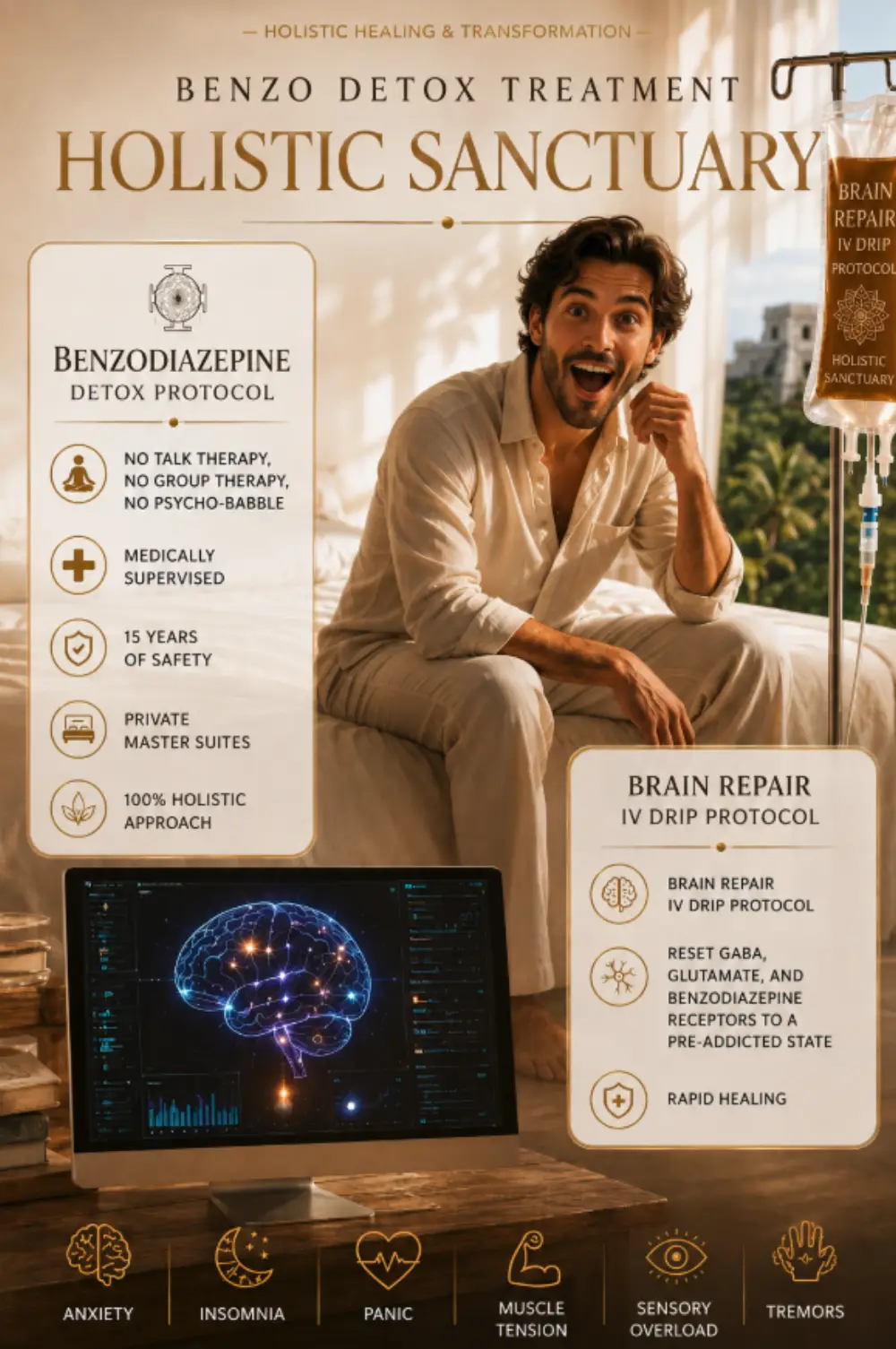
Benzo detox and withdrawal treatment: a physician-directed taper, twenty-four hour monitoring, nine hours of daily therapy and the in-house Brain Repair IV protocol.
Ibogaine
A consumer guide to evaluating an ibogaine provider: screening, cardiac assessment, medical oversight, emergency preparedness and transparency.
Benzodiazepine Treatment
Physician-supervised benzodiazepine detox and withdrawal support: gradual tapering, nine hours of daily one-to-one therapy, the in-house Brain Repair IV protocol, and whole-body restoration in a private oceanfront setting.
Mental Health
An integrative approach to PTSD, trauma, depression and anxiety that treats sleep, nutrition, environment and behavior as clinical variables.
Holistic Treatment
Rehabilitation as system repair: mental health, behavior, environment, nutrition and sleep, with specialized medical support where it is needed.
Ibogaine
Why the weeks after an experience matter: reflection, behavior, sleep, nutrition, relationships, meaning and ongoing professional support.
Ibogaine
Medical, psychological and practical preparation: history, medication review, ECG, laboratory assessment, consent and integration planning.
Ibogaine
A comprehensive, evidence-led resource on ibogaine: pharmacology, the research base, cardiac risk, candidacy, preparation and integration.
Admissions is a confidential clinical conversation, not a sales call. We review history, current medication, and goals before anyone is accepted.