
Mental Health
Holistic Mental Health Treatment
An integrative approach to PTSD, trauma, depression and anxiety that treats sleep, nutrition, environment and behavior as clinical variables.
Holistic rehab
Rehabilitation can mean more than removing a substance. It can mean rebuilding the systems that support a healthier life. At Holistic Sanctuary, holistic rehab is an integrated approach that may address mental health, trauma, behavior, environment, nutrition, sleep, physical wellbeing, relationships, and substance-related concerns where appropriate.
What it means
Most people arrive for a reason, not a category. They describe years of unresolved trauma, a depression that has not moved, sleep that has not been right since a bereavement, a dependence on prescribed benzodiazepines, drinking that has become load-bearing, or a behavioral pattern that has quietly taken over the week. Conventional residential programmes often translate all of that into one diagnosis and one fixed curriculum.
Holistic rehabilitation, as we practise it, does the opposite. The plan is authored per person; mental health, trauma, behavior, physical depletion and dependence are treated as one clinical picture rather than three separate referrals; and a resident is not required to do group work at all.
What it does not mean is treating withdrawal casually. SAMHSA and the American Society of Addiction Medicine are both unambiguous that alcohol and sedative withdrawal can be medically dangerous, and that withdrawal management belongs under medical supervision. No one should stop benzodiazepines or alcohol abruptly on their own, withdrawal is never risk-free, and nothing here removes symptoms. Supervised withdrawal is the first stage of every admission that requires it.
Integrated areas
Mental health
For many residents, mental health is the reason they came, not a footnote to something else. Depression, PTSD, anxiety, and unresolved trauma are treated inside the same residency, from the first week, at the pace the resident can hold.
Medication decisions remain medical decisions. We do not ask anyone to stop a prescription to enter treatment here, and we do not present medication as a failure of commitment. The goal is to understand what the symptoms are doing, what they may be responding to, and what combination of supports can shift them.
Trauma work is paced and individualized. We do not assume that every resident with PTSD needs the same intervention, and we do not push exposure before stabilization is in place. Psychedelic-assisted therapy, where it is considered, is only after screening, medical clearance, and informed discussion of legal status and risks.
Depression and anxiety are approached through sleep, nutrition, movement, individual therapy, and, when appropriate, emerging modalities with a clear evidence distinction. We do not claim any programme cures depression or eliminates anxiety.
Behavioral patterns
Behavioral dependencies are clinically distinct from substance dependence, and they are not grouped with it here. Compulsive patterns around sex, pornography, gambling, shopping, food, or screen-based trading are often regulating something else: boredom, anxiety, shame, loneliness, or a life that has narrowed.
The work is behavioral and psychological. We look at what the pattern regulates, the cues that sustain it, the environments that make it more likely, and what can replace it in a real week at home. This is not a matter of willpower alone; it is a matter of understanding the system that keeps the pattern in place.
Each pattern is assessed individually. The plan is built around the person, not the symptom list.
Specialized support
Some residents also need care for a dependence. It is one part of an individualized plan rather than the whole of it, and it is always physician-supervised. The following dedicated pages are in preparation, beginning with our guide to holistic benzodiazepine treatment.
Residential care for alcohol dependence, with physician oversight throughout.
Medically supervised withdrawal management, individually paced. Alcohol withdrawal is never risk-free.
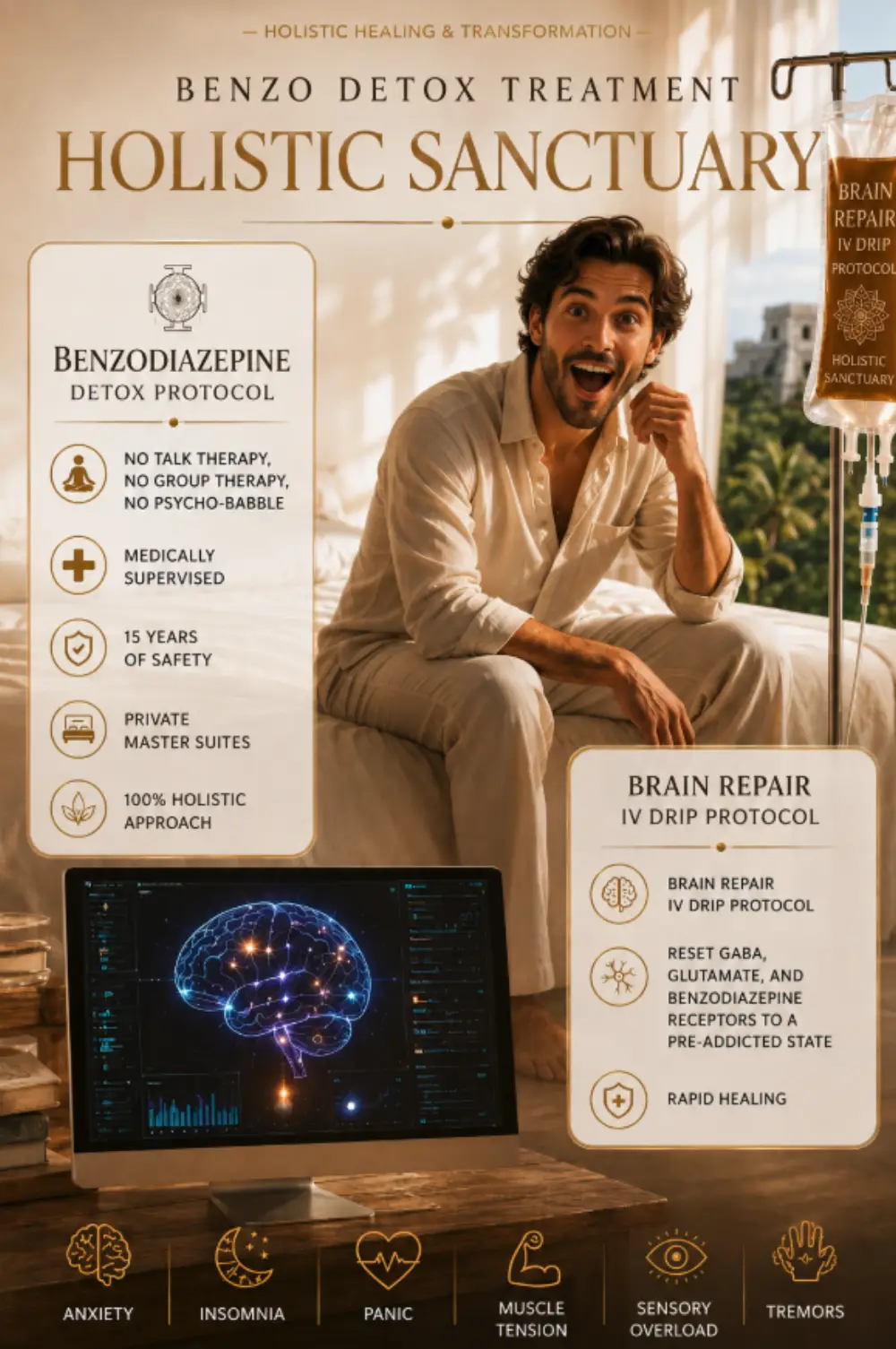
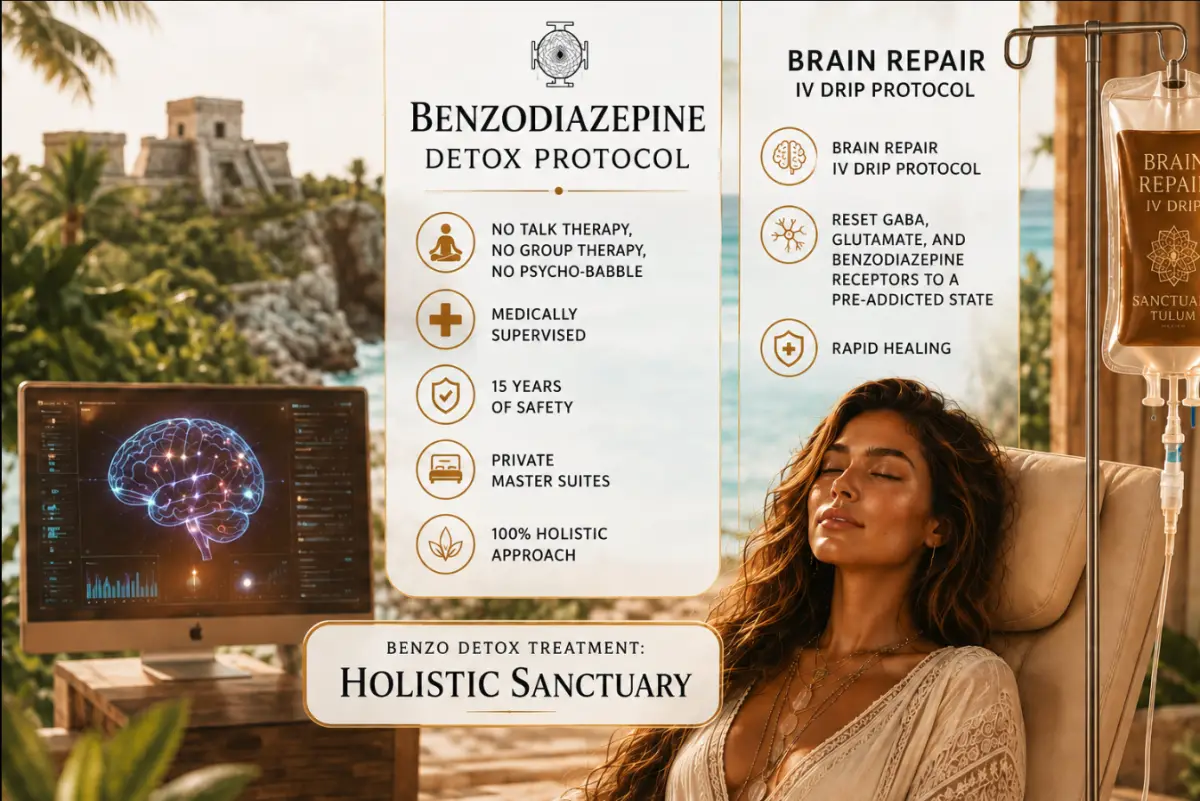
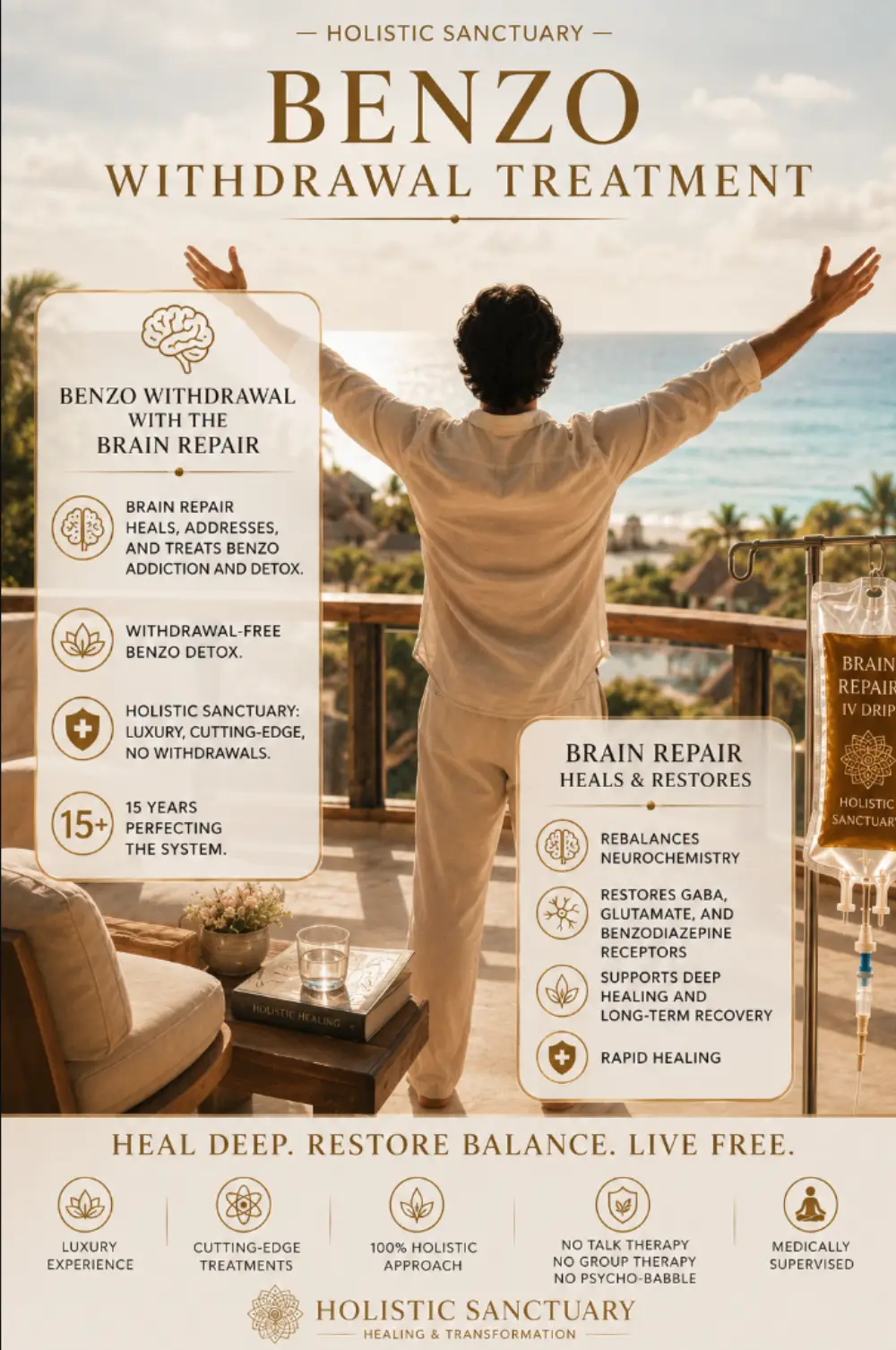
Care for benzodiazepine dependence, with medication review and long-horizon planning.
Physician-directed tapering. Benzodiazepines are never abruptly discontinued here, and should never be stopped alone.
Residential care for opioid dependence, sequenced after medical clearance.








Environment
Healing does not happen in a vacuum. It happens in a specific place, at a specific time of day, surrounded by specific cues. Many of the patterns that bring people here are tied to familiar environments, schedules, relationships, and notifications. A residential programme is, in part, an opportunity to interrupt those loops.
Privacy matters because it reduces the social performance that often accompanies distress. Routine matters because sleep, meals, movement, and reflection become more stable when the day is structured. Nutrition matters because metabolic health, blood sugar, and gut function influence mood and cognition in ways that are increasingly well documented.
The environment is not the treatment. It is the container that makes the treatment possible.
Individualization
No two people require the same combination of interventions. One resident may need a long, slow benzodiazepine taper with intensive sleep restoration. Another may need trauma work, nutritional repair, and support for compulsive trading. Another may arrive primarily for depression and find that the most important shift is in relationships and environment.
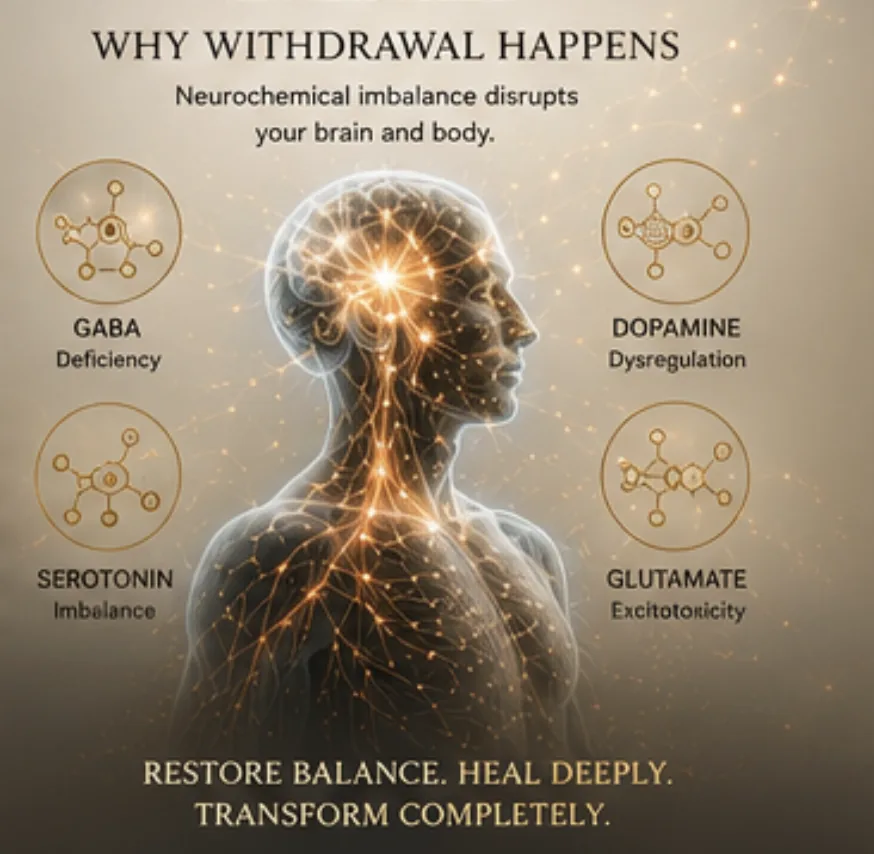
We do not promise outcomes. We do not guarantee recovery, and we do not claim that any protocol eliminates withdrawal or resets neurochemistry. What we offer is a thorough assessment, a physician-supervised plan, individualized therapeutic work, and a setting designed to support the process.
Sequence
History, current prescriptions, laboratory work, and cardiac review where a planned modality requires it. Nothing is scheduled before the medical picture is understood.
Withdrawal is treated as a medical event. Alcohol and benzodiazepine withdrawal can be dangerous without supervision, so detoxification is physician-directed with nursing on site around the clock.
One on One sessions rather than group process. The modality, cadence, and duration are set per resident, and revised as the clinical picture changes.
Nutrition, sleep, movement, and supportive modalities to address the physical depletion that long-term stress and dependence produce. Support for the programme, not a treatment in itself.
Structured work on what the resident returns to — environment, relationships, ongoing clinical care, and continuing prescriptions — planned before discharge, not after it.
References
Explore
The licensed setting, screening, and daily structure behind the programme.
Read moreHow co-occurring depression, PTSD, and anxiety are treated here.
Read moreSupervision, screening, and an honest account of the evidence.
Read moreThe framework that orders these five stages.
Read moreRelated
Mental Health
An integrative approach to PTSD, trauma, depression and anxiety that treats sleep, nutrition, environment and behavior as clinical variables.
Holistic Treatment
What an integrative treatment center actually does: clinical oversight, nutrition, environment and individualized programming under one roof.
Psychedelic Therapy
An editorial review of what the psychedelic research actually shows, compound by compound, with the screening and safety considerations that come with it.
Insights
Benzodiazepine Treatment
Benzo detox and withdrawal treatment: a physician-directed taper, twenty-four hour monitoring, nine hours of daily therapy and the in-house Brain Repair IV protocol.
Ibogaine
A consumer guide to evaluating an ibogaine provider: screening, cardiac assessment, medical oversight, emergency preparedness and transparency.
Benzodiazepine Treatment
Physician-supervised benzodiazepine detox and withdrawal support: gradual tapering, nine hours of daily one-to-one therapy, the in-house Brain Repair IV protocol, and whole-body restoration in a private oceanfront setting.
Mental Health
An integrative approach to PTSD, trauma, depression and anxiety that treats sleep, nutrition, environment and behavior as clinical variables.
Ibogaine
Why the weeks after an experience matter: reflection, behavior, sleep, nutrition, relationships, meaning and ongoing professional support.
Ibogaine
Medical, psychological and practical preparation: history, medication review, ECG, laboratory assessment, consent and integration planning.
Ibogaine
QT prolongation, arrhythmia risk, CYP2D6 metabolism, drug interactions and electrolytes — what the safety literature establishes and what remains uncertain.
Ibogaine
A comprehensive, evidence-led resource on ibogaine: pharmacology, the research base, cardiac risk, candidacy, preparation and integration.
Admissions is a confidential clinical conversation, not a sales call. We review history, current medication, and goals before anyone is accepted.