Ibogaine
Ibogaine Treatment
A comprehensive, evidence-led resource on ibogaine: pharmacology, the research base, cardiac risk, candidacy, preparation and integration.
Comparison
These compounds are discussed as one category and are not one. They differ in receptor pharmacology, duration, subjective character, research maturity and the kind of risk they carry. None is better than the others; the useful question is which, if any, is appropriate for a specific person.
Side by side
| Compound | Pharmacology | Duration | Subjective experience | Research maturity | Therapeutic research | Principal safety focus |
|---|---|---|---|---|---|---|
| Ibogaine | Multi-target: NMDA, kappa and mu opioid, nicotinic, sigma receptors and the serotonin transporter; blocks the hERG potassium channel | Many hours acute, with a recovery period of a day or more; long-lived active metabolite noribogaine | Frequently described as dreamlike and strongly autobiographical rather than perceptual | No completed randomized controlled trials; prospective observational cohorts, open-label studies, case series, systematic reviews | Opioid dependence is the primary research focus; trauma-related indications explored observationally | Cardiac: QT prolongation, arrhythmia risk, documented fatalities; CYP2D6 interaction variability |
| Psilocybin | Primarily serotonin 5-HT2A receptor agonism | Approximately four to six hours | Perceptual and emotional changes, commonly reported shifts in perspective | Multiple small randomized controlled trials in depression, including a head-to-head against escitalopram; alcohol use disorder trial data | Depression, treatment-resistant depression, alcohol use disorder, end-of-life distress | Cardiovascularly better tolerated; psychiatric screening central, psychosis and bipolar risk key exclusions |
| 5-MeO-DMT | 5-HT1A and 5-HT2A activity | Minutes | Very rapid onset and offset; frequently described as overwhelming and non-narrative | Small early-phase and observational studies only | Depression and anxiety signals in early work; evidence base thin | Short window limits some risks; systematic safety data limited, setting and supervision critical |
| Ayahuasca | DMT combined with reversible MAO-A inhibition from beta-carboline alkaloids | Approximately four hours, with a pronounced physical component | Visual and emotional, typically with nausea and vomiting | One small randomized placebo-controlled trial in treatment-resistant depression plus observational cohorts | Depression is the main research focus | MAO inhibition creates significant drug and dietary interaction risk, including with serotonergic medication |
| LSD | Broad serotonergic and dopaminergic activity, 5-HT2A dominant | Eight to twelve hours | Long, perceptually intense, cognitively activating | Historic mid-century studies plus recent controlled trials in anxiety; smaller modern base than psilocybin | Anxiety, including anxiety associated with life-threatening illness | Duration increases supervision burden; psychiatric screening central |
Reading the table
Psilocybin has multiple randomized controlled trials in depression. Ibogaine has none completed to regulatory standard. Treating a favourable observational study of one compound as equivalent to a randomized trial of another is the most common error in this area, and it flatters ibogaine specifically.
For psilocybin and LSD it is largely psychiatric. For ayahuasca it is dominated by MAO inhibition and interaction risk. For ibogaine it is cardiac, with documented mortality. These are not degrees of the same risk; they require different screening entirely.
A five-minute experience, a four-hour experience and a multi-day process demand different supervision, different staffing and different recovery arrangements. Duration is often treated as a detail of subjective interest; clinically it is a structural constraint.
No psychedelic compound discussed here is approved by the FDA for depression, PTSD or substance dependence. Breakthrough designations, funding and commercial investment are not efficacy findings. The wider evidence review is on our psychedelic therapy page.
Compound by compound
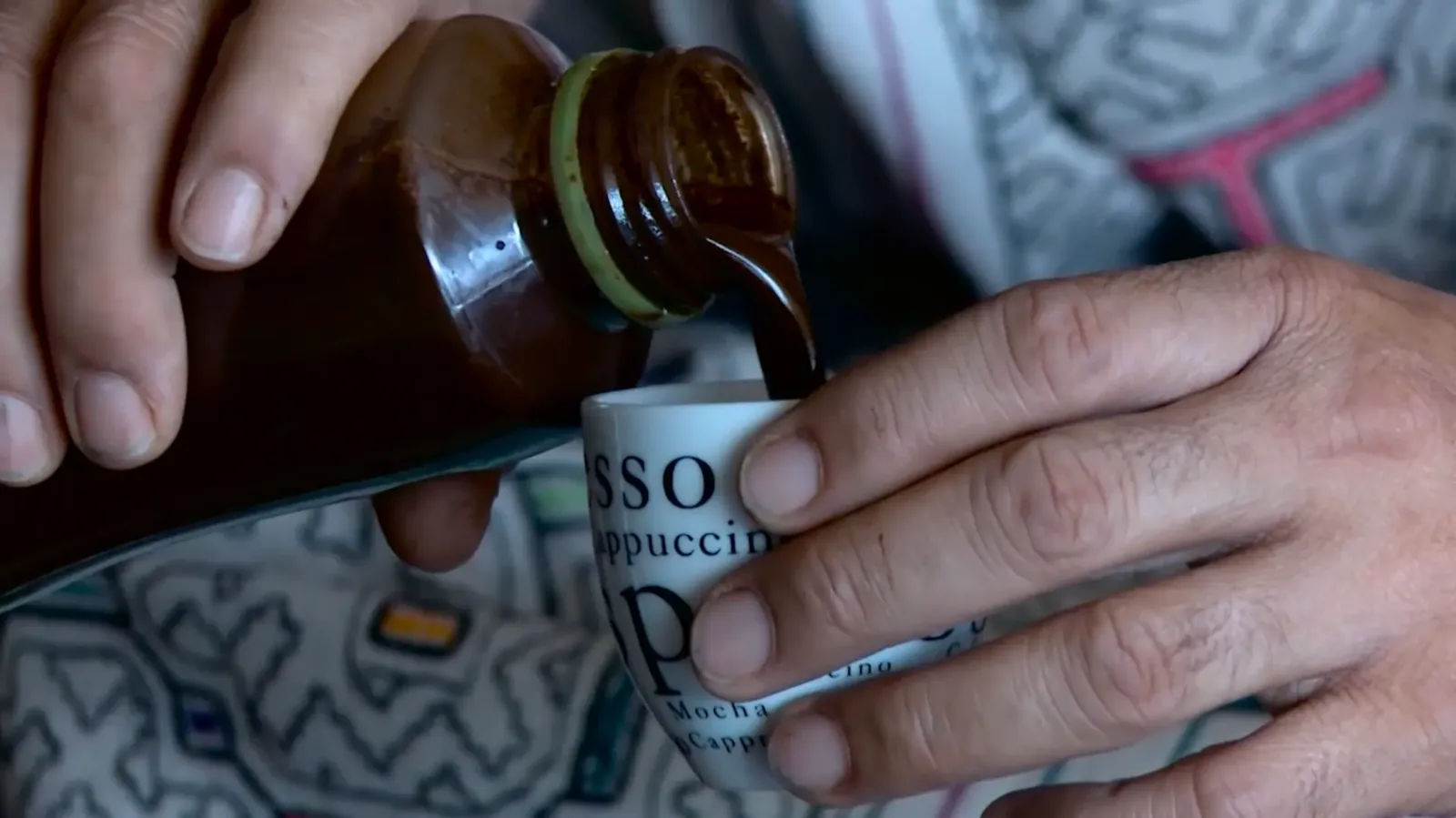
Ibogaine is an indole alkaloid derived from Tabernanthe iboga that acts across NMDA, kappa and mu opioid, nicotinic and sigma receptors, and blocks the hERG potassium channel. Its long-lived metabolite noribogaine extends the pharmacological course well beyond the acute experience. Research attention has concentrated on opioid dependence and withdrawal, where prospective observational cohorts and case series report reductions in use and withdrawal severity in some participants. No randomized controlled trial has been completed to regulatory standard. Cardiac screening, continuous monitoring and medication review are not optional refinements of this treatment; they are the treatment's central safety requirement. The full picture is set out on our ibogaine treatment guide.
Psilocybin's action is dominated by 5-HT2A agonism, with an acute course of roughly four to six hours. It has the most developed modern trial base of the group, including randomized controlled trials in major depression and treatment-resistant depression, a head-to-head comparison with escitalopram, and trial data in alcohol use disorder. Cardiovascularly it is comparatively well tolerated in screened populations; the screening emphasis is psychiatric, with psychosis and bipolar spectrum histories treated as principal exclusions. A dedicated psilocybin resource is in preparation at /psilocybin/.
5-MeO-DMT acts at 5-HT1A and 5-HT2A receptors with an acute course measured in minutes. Reports describe an unusually rapid onset and a largely non-narrative character, which differs sharply from ibogaine's extended autobiographical quality. Published evidence is limited to small early-phase and observational work, and systematic safety data are thin — a genuine unknown rather than a demonstrated safety advantage. A dedicated page is planned at /5-meo-dmt/.
Ayahuasca combines DMT with beta-carboline alkaloids that reversibly inhibit monoamine oxidase A. That combination is what makes DMT orally active, and it is also the source of the principal risk: interaction with serotonergic medication, other psychoactive substances and, to a lesser degree, certain foods. The acute course runs approximately four hours and commonly involves nausea and vomiting. One small randomized placebo-controlled trial in treatment-resistant depression, supported by observational cohorts, forms the core of the clinical literature. A dedicated page is planned at /ayahuasca-retreat/.
LSD has broad serotonergic and dopaminergic activity with 5-HT2A dominance, and an acute course of eight to twelve hours. The modern controlled evidence is smaller than psilocybin's and centres on anxiety associated with life-threatening illness, alongside a substantial but methodologically dated mid-century literature. Its length is a clinical variable in itself: supervision, staffing and recovery arrangements all scale with duration.
Nothing above ranks these compounds. A larger trial base means a question has been studied more thoroughly, not that a compound is better for a given person. Equally, a shorter experience is not inherently safer, and an older tradition of use is not evidence of clinical efficacy.
Clinical and legal
Screening differs by compound because the risks differ in kind. Ibogaine requires ECG and cardiac assessment, electrolyte correction and detailed medication review, including agents that prolong the QT interval or are metabolised through CYP2D6. Ayahuasca requires a serotonergic and MAO-interaction review. Psilocybin and LSD are screened principally for psychiatric history. Across all of them, current medication, coexisting medical conditions, prior psychiatric episodes and the availability of qualified supervision matter more than the compound's reputation.
Preparation and integration are also not interchangeable across compounds. A five-minute experience and a multi-day process require different aftercare structures, and outcomes in the observational literature are consistently associated with what follows the session.
Legal status varies substantially by country and, in some cases, by state or province, and it changes over time. Most of these compounds are controlled substances in the United States. Some jurisdictions permit supervised or research use under specific authorisations; others permit religious or traditional use in defined contexts. Anyone considering treatment should verify the current legal position in the relevant jurisdiction directly rather than relying on general summaries.
Regulatory interest is likewise not efficacy. Breakthrough therapy designations and clinical-trial authorisations indicate that a question is considered worth studying carefully. The evidence tiers for each compound are set out on our psychedelic therapy page, and ibogaine's specific risk profile on ibogaine safety.
Questions
Strength is not a useful comparison, because these compounds act on different receptor systems. Ibogaine is pharmacologically the most complex of the group and has the longest acute course, but that describes its character and its supervision requirements rather than ranking it above psilocybin, ayahuasca, LSD or 5-MeO-DMT.
Psilocybin acts primarily at the serotonin 5-HT2A receptor, lasts four to six hours and has multiple randomized controlled trials in depression. Ibogaine acts across NMDA, opioid, nicotinic and sigma systems, lasts far longer, is studied mainly in opioid dependence and carries a documented cardiac risk that psilocybin does not.
5-MeO-DMT is measured in minutes and is typically described as non-narrative and overwhelming in onset. Ibogaine unfolds over many hours and is more often described as autobiographical. The published evidence for both is early, but 5-MeO-DMT has less systematic safety data while ibogaine has better-characterised cardiac risk.
No. Ayahuasca's principal risk is pharmacological interaction created by reversible MAO-A inhibition, particularly with serotonergic medication. Ibogaine's principal risk is cardiac conduction, including QT prolongation and arrhythmia. Screening for one does not substitute for screening for the other.
LSD has both mid-century literature and modern controlled trials in anxiety associated with life-threatening illness. Ibogaine has no completed randomized controlled trial to regulatory standard. That difference reflects research history and funding as well as pharmacology, and it is not a statement about individual suitability.
They do not. Most are controlled substances in the United States and many other countries, while regulatory treatment varies by jurisdiction, and several are the subject of ongoing clinical research authorisations. Legal status changes over time and by country, so it should be verified locally rather than assumed from any article.
No compound discussed here is FDA-approved for depression, PTSD or substance dependence. Breakthrough therapy designations, research funding and commercial investment indicate regulatory and market interest, not proven efficacy.
That decision belongs in a clinical conversation, not an article. It depends on the condition in question, cardiac and psychiatric history, current medication, prior experience and what evidence exists for that indication. For some people the appropriate answer is that none of these is suitable.
References
Explore
Related
Ibogaine
A comprehensive, evidence-led resource on ibogaine: pharmacology, the research base, cardiac risk, candidacy, preparation and integration.
Psychedelic Therapy
An editorial review of what the psychedelic research actually shows, compound by compound, with the screening and safety considerations that come with it.
Ibogaine
QT prolongation, arrhythmia risk, CYP2D6 metabolism, drug interactions and electrolytes — what the safety literature establishes and what remains uncertain.
Ibogaine
A consumer guide to evaluating an ibogaine provider: screening, cardiac assessment, medical oversight, emergency preparedness and transparency.
Insights
Benzodiazepine Treatment
Benzo detox and withdrawal treatment: a physician-directed taper, twenty-four hour monitoring, nine hours of daily therapy and the in-house Brain Repair IV protocol.
Ibogaine
A consumer guide to evaluating an ibogaine provider: screening, cardiac assessment, medical oversight, emergency preparedness and transparency.
Benzodiazepine Treatment
Physician-supervised benzodiazepine detox and withdrawal support: gradual tapering, nine hours of daily one-to-one therapy, the in-house Brain Repair IV protocol, and whole-body restoration in a private oceanfront setting.
Mental Health
An integrative approach to PTSD, trauma, depression and anxiety that treats sleep, nutrition, environment and behavior as clinical variables.
Holistic Treatment
Rehabilitation as system repair: mental health, behavior, environment, nutrition and sleep, with specialized medical support where it is needed.
Ibogaine
Why the weeks after an experience matter: reflection, behavior, sleep, nutrition, relationships, meaning and ongoing professional support.
Ibogaine
Medical, psychological and practical preparation: history, medication review, ECG, laboratory assessment, consent and integration planning.
Ibogaine
QT prolongation, arrhythmia risk, CYP2D6 metabolism, drug interactions and electrolytes — what the safety literature establishes and what remains uncertain.
Admissions is a confidential clinical conversation, not a sales call. We review history, current medication, and goals before anyone is accepted.